Dad let my sister “store a few things” in my apartment. I came home to her furniture. My couch was in the dumpster. “She needs this more,” Mom said. I walked straight to the leasing office and broke my own lease. Paid the $4,200 fee in cash. When she showed up the next morning with more boxes…
My name’s Matt. I’m 28.
And I want to tell you about the time my own family turned my apartment into a storage unit, threw my couch in a dumpster, and then had the audacity to act surprised when I burned the whole situation to the ground.
And by burned, I mean I paid $4,200 in cash to break my own lease just to make a point, which, looking back, might be the most expensive act of spite in my personal history, but honestly worth every single penny.
Let me give you some background.
I’m the younger of two kids.
My sister Jolene is 31, and she has been the center of my parents’ universe since approximately the moment she drew her first breath.
I don’t say that with bitterness.
Okay, maybe a little bitterness, but mostly I say it as a statement of fact, the way you’d say the sky is blue or that gas station coffee tastes like regret.
It’s just the truth.
Growing up, Jolene got the bigger bedroom even though I was the one who actually slept in mine.
She had this habit of turning her room into a walk-in closet, art studio, whatever phase she was in that month.
And my parents thought that was creative.
When I asked for a desk so I could do homework somewhere other than the kitchen table, my mom told me the kitchen table built character.
When Jolene asked for a vanity mirror with lights around it like she was backstage at a Broadway show, my dad installed it that weekend.
I’m not going to sit here and pretend I had some tragic childhood.
I didn’t.
My parents kept a roof over my head, food on the table, and made sure I had what I needed.
The key word there is needed.
Jolene got what she wanted.
There’s a difference.
And if you grew up as the unfavored kid, you know exactly what I’m talking about.
It’s not abuse. It’s not neglect.
It’s just this constant low-grade awareness that you’re second in line and the person in front of you is never going to move.
I’ll give you one more example so you really get the picture.
When I graduated high school, my parents took me to dinner at a chain restaurant, and my mom said she was proud of me, which was nice.
When Jolene graduated 2 years before me, they threw her a backyard party with a DJ and a catered taco bar and invited 40 people.
I know because I was there carrying folding chairs from the garage while Jolene posed for photos with a sash that said “Class of whatever year it was.”
I didn’t resent the party.
I resented that it never occurred to anyone to throw me one.
And when I brought it up years later, my mom said, “Oh, you never seemed like the party type,” which is a convenient thing to believe about the kid you forgot to celebrate.
I moved out at 19, worked two jobs through community college, transferred to a state school, got a degree in IT, and landed a decent job at a midsize company doing network administration.
Nothing glamorous. Nothing that would make anyone’s jaw drop.
But it paid well enough that by 26, I had my own one-bedroom apartment in a nice complex, a reliable car, and a savings account that didn’t make me want to cry when I looked at it.
I built all of that myself.
My parents didn’t contribute a dime, which was fine. I never asked them to.
Jolene’s trajectory was a little different.
She went to a private college on my parents’ credit card, changed her major four times, graduated two years late with a degree in communications, and then proceeded to communicate herself into a series of dead-end jobs and bad relationships.
At 31, she’d been fired from three positions in 2 years, had just gone through her second breakup that involved a lease she couldn’t afford alone, and was once again moving back in with my parents.
Or so I thought.
It started on a Thursday.
I remember because I had just gotten home from a particularly long day at work where our main server decided to have an existential crisis, and all I wanted to do was microwave some leftover pasta, sit on my couch, and watch something mindless on TV.
Simple plan. Easy to execute.
Or it would have been if my apartment still resembled my apartment.
Chapter 2: The apartment takeover
My dad had a spare key.
I’d given it to him 2 years earlier for emergencies.
A pipe bursts. I lose my keys. I get hit by a bus, and someone needs to feed my hypothetical cat.
Emergency situations.
What I did not anticipate was that my father’s definition of emergency included my sister needing somewhere to put her dining table.
I opened my door and immediately knew something was wrong because I could smell vanilla.
I don’t own anything vanilla-scented.
I’m a grown man whose apartment smells like coffee and whatever I last cooked, and I’m at peace with that.
But there it was.
This aggressive wall of vanilla hitting me in the face, coming from a candle I’d never seen sitting on an end table I’d never bought.
I took three steps inside and stopped.
My living room looked like someone had played Tetris with furniture and lost.
There was a dining table pushed against the wall where my bookshelf used to be.
My bookshelf was gone.
There were two chairs I didn’t recognize, a floor lamp with a pink shade, and three cardboard boxes stacked in the corner.
My TV was still there, thankfully, but it had been moved to a different wall and was now sitting on what appeared to be a dresser.
My couch was missing.
Let me say that again for the people in the back.
My couch.
The couch I spent $1,100 on.
The couch I researched for 3 weeks because I wanted the right firmness and the right color and the right amount of cushion.
The couch that was, without exaggeration, my favorite piece of furniture I had ever owned.
That couch was gone.
I called my dad.
He picked up on the second ring.
Casual as anything.
Like he hadn’t just committed a felony against my living room.
“Hey, bud, what’s going on?”
“Dad, what happened to my apartment?”
“Oh, right. Yeah, so your sister needed to store a few things. Her lease ended, and she’s moving in with us, but we don’t have room for all her furniture, so I told her she could keep some of it at your place for a little while. No big deal.”
No big deal.
The man rearranged my entire apartment, brought in someone else’s furniture, and removed my couch.
And he’s telling me it’s no big deal.
“Where is my couch, Dad?”
There was a pause.
The kind of pause that tells you the next sentence is going to make you want to put your fist through drywall.
“Well, we had to make room for her dining set, and your couch was too big to work around, so we moved it out.”
“Moved it where?”
Another pause.
Longer this time.
“I think the maintenance guys took it to the dumpster area. But listen, Matt, it’s just a couch. Your sister really needed the space, and she’s going through a hard time right now. You can get another one.”
I stood in my own apartment, surrounded by my sister’s furniture, staring at the spot where my couch used to be.
And I felt something shift inside my chest.
It wasn’t anger.
Not yet.
It was something quieter and worse.
It was the realization that after 28 years, absolutely nothing had changed.
Chapter 3: Breaking the lease
I went outside to the dumpster area, and there it was.
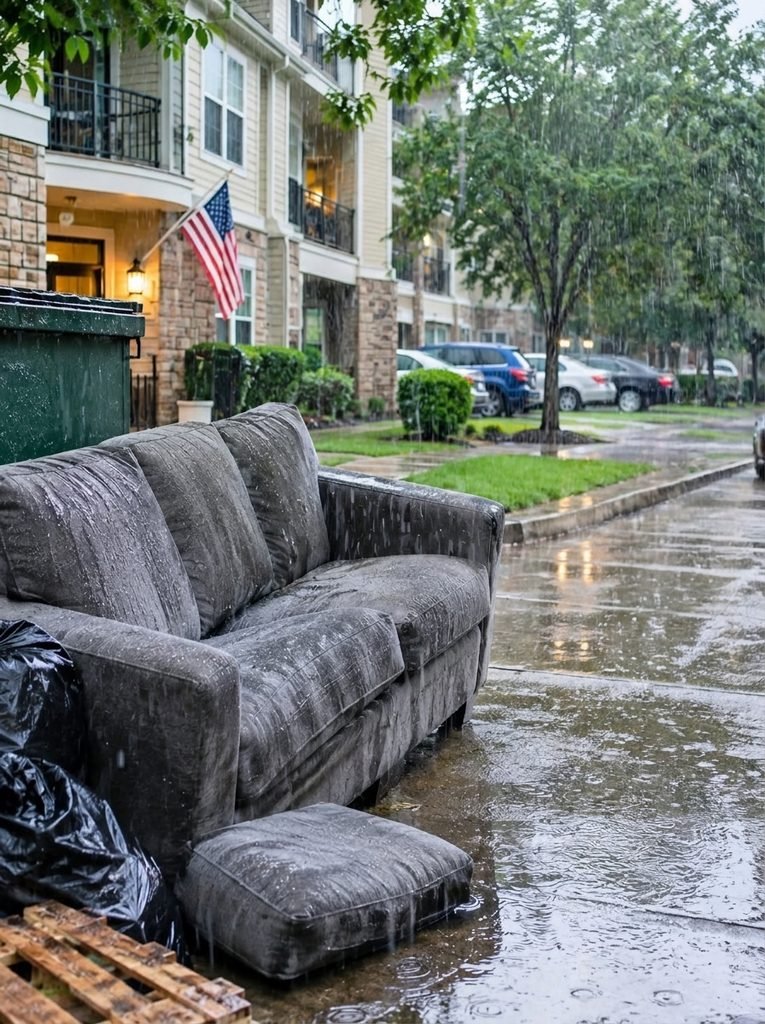
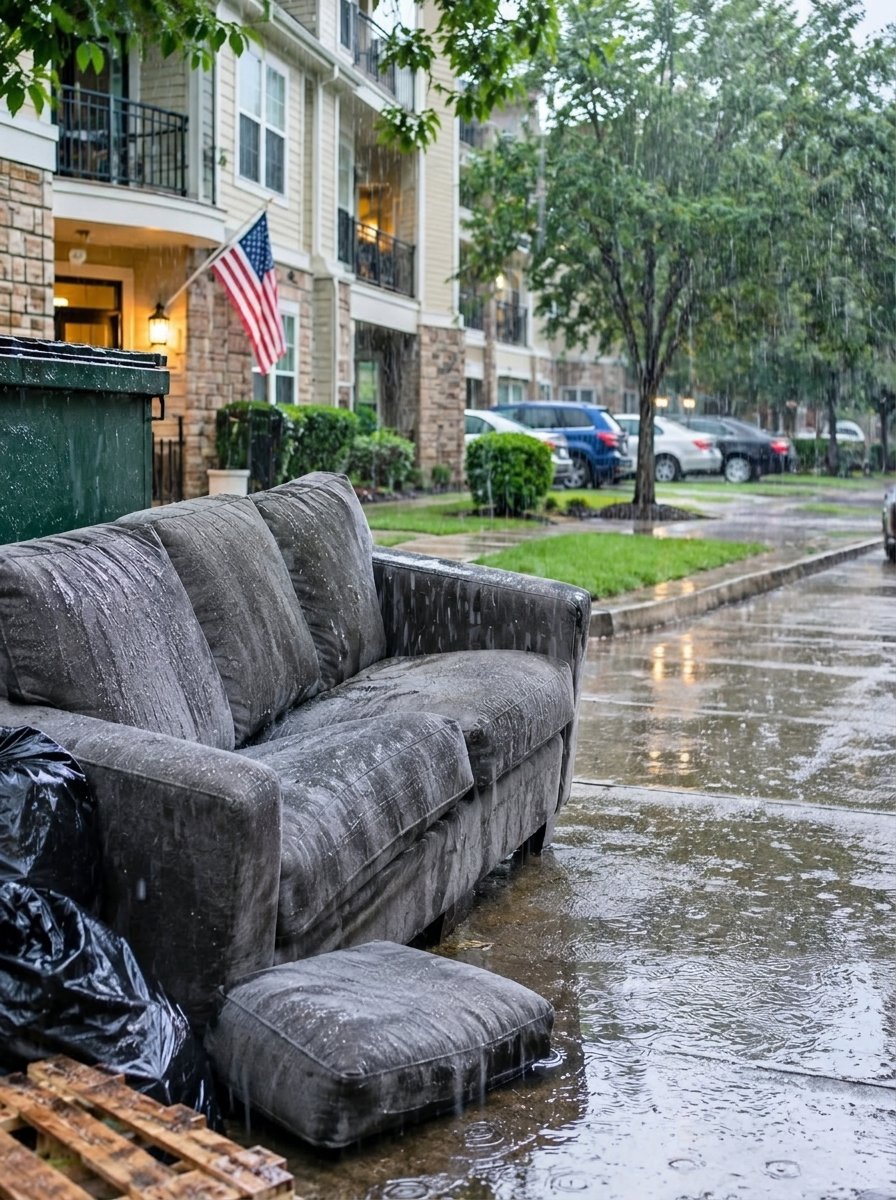
My $1,100 couch sitting next to a pile of garbage bags and a broken pallet, getting rained on.
It wasn’t even in the dumpster.
Technically, it was leaning against it at an angle, one cushion already on the ground in a puddle.
I just stood there staring at it for a while, rain hitting my face, thinking about how I’d saved for that thing, how I’d measured my living room twice to make sure it would fit, how I’d assembled it myself because I didn’t want to pay the delivery fee for setup.
And they threw it away like it was nothing.
Because to them, it was nothing.
Because it was mine.
I went back inside and called my mom.
I don’t know why I thought she’d be different.
Maybe because moms are supposed to have that gene that makes them fair.
That instinct that tells them when one kid is getting the short end.
My mom has that gene.
It’s just exclusively activated for Jolene.
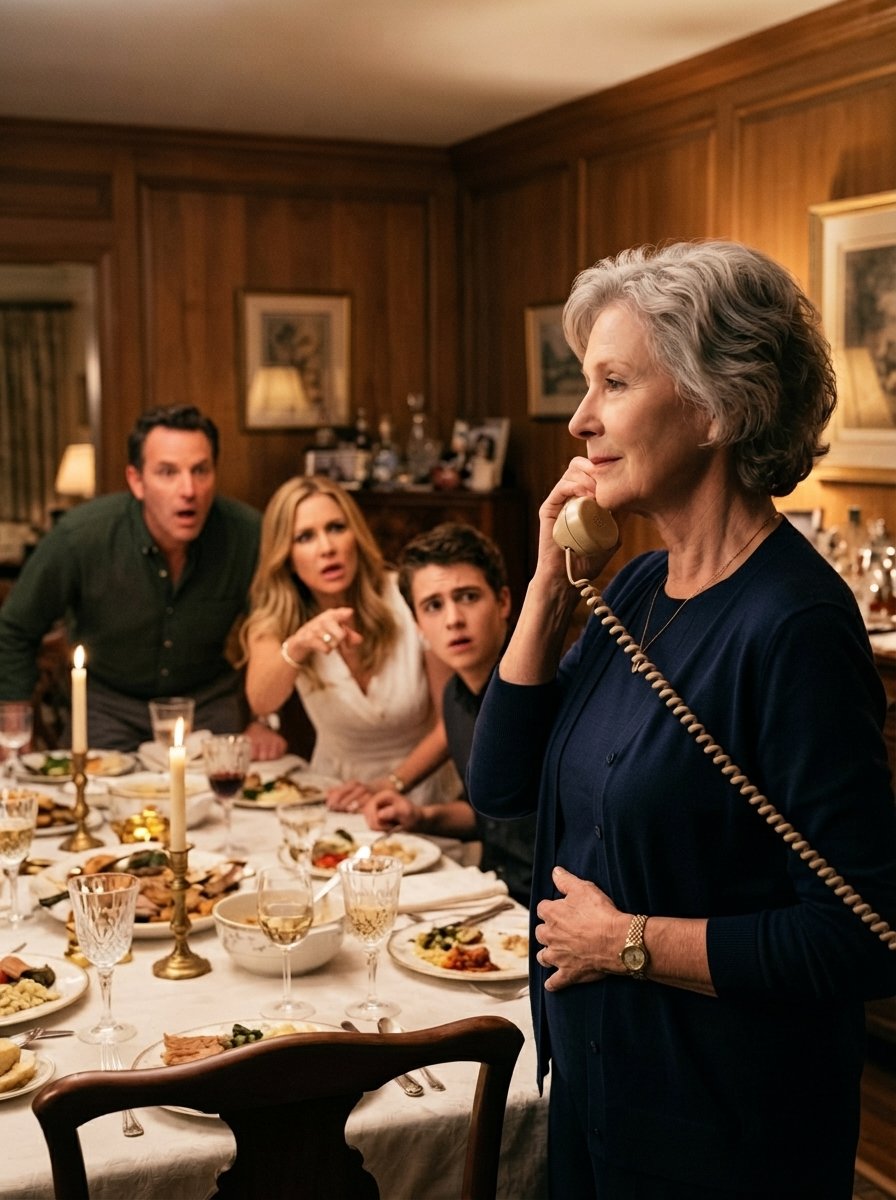
“Matthew, your sister is going through a really difficult time right now. She lost her job. She and Derek broke up, and she had to leave her apartment. The least you can do is let her store a few things at your place.”
“A few things? Mom, there’s a dining table, chairs, a dresser, a floor lamp, and three boxes of who knows what. They threw my couch away.”
“Your father said it was old.”
“It was 2 years old.”
“Well, Jolene needs this more than you need an empty living room. You’re a single guy with no kids. You don’t even use half your space. She has real furniture, Matt. Nice things. You should be grateful she’s willing to let you hold on to them.”
Grateful.
She actually said grateful.
I should be grateful that my sister’s furniture was better than mine.
So, it was an upgrade to have it forced into my apartment without my knowledge or consent.
That’s the logic my mother operated on.
And she delivered it without a shred of irony.
I hung up.
Not dramatically.
I just said I had to go and ended the call because I knew if I kept talking, I was going to say something I couldn’t take back.
And despite everything, some stupid, stubborn part of me still didn’t want to be the bad guy.
That’s the trap, by the way.
When you’re the unfavored kid, you spend your whole life trying not to prove them right.
You bend, and you flex, and you absorb, because if you ever push back, suddenly you’re the problem.
You’re the difficult one.
You’re the one who can’t just be a team player.
I didn’t sleep well that night.
I tried to, but it’s hard to relax in your own home when your own home doesn’t feel like yours anymore.
The vanilla candle was still going.
I blew it out and threw it in the trash, which felt like the smallest possible act of rebellion, but I took what I could get.
The next morning, Friday, I went to work and tried to focus.
Couldn’t.
By lunch, I’d made a decision that I realize sounds impulsive, but I want you to understand something.
This wasn’t impulsive.
This was 28 years in the making.
Every time I got the smaller portion, the later curfew, the lesser gift, the forgotten birthday, the brushed-off achievement, while Jolene got the parade.
Every single one of those moments stacked up inside me like bricks.
And my couch in the rain was the last one.
The wall was done.
There was nowhere else to build.
I left work early, drove to my apartment complex, and went straight to the leasing office.
I told the property manager I needed to break my lease.
She looked at me like I’d asked her to solve a calculus problem.
“You want to break your lease? You have 7 months left.”
“I know. What’s the penalty?”
“$4,200. Two months’ rent plus the administrative fee.”
“Can I pay it now?”
She blinked.
“Like right now?”
“Cash.”
I’d been to the bank on my lunch break.
Pulled out the money from my savings, which hurt, but not as much as staying in an apartment that my family had decided belonged to my sister.
The property manager processed the paperwork.
I signed everything.
And just like that, I had 30 days to vacate.
My lease was done.
Chapter 4: Setting clear boundaries
Then I went home and started packing.
Not Jolene’s stuff.
My stuff.
I boxed up my clothes, my books, my kitchen gear, my electronics, everything that was mine.
I called my buddy Trent and asked if I could crash at his place for a couple weeks while I figured out my next move.
Trent, being the kind of friend that actual good people have, said yes without asking a single question and then showed up an hour later with his truck.
We loaded my stuff in three trips.
By 9:00 that evening, my apartment was empty of everything that belonged to me.
What remained was Jolene’s dining table, her chairs, her dresser, her lamp, her boxes, and a lot of empty space.
I left the keys on the kitchen counter.
I did not call my parents.
I did not call my sister.
I did not leave a note.
I just left.
Saturday morning, I was at Trent’s place eating cereal on his couch like a college kid.
And my phone started ringing.
Dad first, then Mom, then Jolene, then Dad again.
I let them all go to voicemail.
The texts started around 10:00.
Dad: “Matt, your sister went to drop off more stuff, and the apartment is empty. What’s going on? Call me.”
Mom: “Matthew Allen. You call your father right now. Where is your furniture? What did you do?”
Jolene: “Are you serious right now? Where am I supposed to put my things? Matt, this isn’t funny.”
I read them all.
I put my phone face down on the coffee table, and I ate my cereal.
Look, I know some of you are thinking I should have confronted them.
Had the big conversation, set boundaries, explain my feelings like a mature adult.
And you’re right, that would have been the healthy thing to do.
But here’s what I’ve learned about my family.
They don’t hear me.
I’ve tried talking.
I’ve tried explaining.
I’ve tried calmly and rationally pointing out that maybe, just maybe, giving your daughter a key to your son’s apartment so she can take it over without asking is a little bit insane.
It doesn’t land.
It never lands.
The only language they understand is consequences.
And I had just delivered a $4,200 consequence that they were not prepared for.
My phone rang 11 more times before noon.
I finally answered when Jolene called for the fourth time, mostly because I was curious what angle she’d take.
“Matt, what the heck is wrong with you? I showed up this morning with a carload of boxes, and your apartment is completely empty. Like, all your stuff is gone. The leasing office said you broke your lease. Are you out of your mind?”
“I moved out.”
“You moved out? Where? Why?”
“Because you and Dad turned my apartment into your storage unit without asking me. You threw my couch in the dumpster, Jolene. My $1,100 couch.”
“Oh my God. Are you still on about the couch? It was just a couch, Matt. I’m dealing with real problems here. I have nowhere to put my furniture now. Mom and Dad’s garage is already full.”
“That sounds like a you problem.”
There was a silence on the other end that I can only describe as the sound of someone realizing for the first time that the person they’ve been stepping on has legs.
She sputtered something about me being selfish and dramatic, and I hung up.
Then I blocked her number, which I’ll admit felt a little petty, but also felt like drinking cold water on a hot day.
Chapter 5: Rebuilding a new life
The first two weeks after I moved out were rough, and I’m not going to pretend they weren’t.
I was sleeping on Trent’s pull-out sofa, which had the structural integrity of a folding chair, living out of boxes, and $4,200 lighter in my savings account.
I’d made a dramatic exit, sure, but dramatic exits come with a price tag.
And mine was currently manifesting as lower back pain and a dwindling bank balance.
Trent was great about it.
He never made me feel like a burden, never asked for rent, and only mildly roasted me about the situation, which for Trent showed remarkable restraint.
The man once made fun of me for an entire weekend because I mispronounced quinoa at a restaurant.
“So, let me get this straight,” he said one evening while we were eating takeout. “Your dad used his emergency key to let your sister move her furniture into your apartment. They threw your couch in a dumpster. And when you called your mom, she told you to be grateful.”
“That’s the short version.”
“Yeah, dude. Your family is insane.”
“I’m aware.”
“Like, that’s not normal family drama. That’s criminal trespassing with a dining table.”
He wasn’t wrong.
But knowing your family is dysfunctional and actually doing something about it are two very different things.
And for years, I’ve been stuck in the knowing phase without ever graduating to the doing phase.
Until now.
I threw myself into work.
My boss, a guy named Glenn who looked like a retired linebacker and had the emotional intelligence of a golden retriever, noticed I was putting in extra hours and asked if everything was okay.
I gave him the abbreviated version, and he just shook his head and said, “Family, man. Can’t live with them, can’t deduct them on your taxes.”
Which wasn’t exactly profound, but it made me laugh.
And that week, I needed the laugh.
Glenn started giving me more responsibility, not out of pity, but because he could see I was actually good at what I did when I wasn’t distracted by my family treating me like a secondary character in my own life.
I took on a server migration project that nobody else wanted, and I knocked it out 2 weeks ahead of schedule.
Then I streamlined our ticketing system, which saved the help desk about 6 hours a week.
Glenn put me up for a raise.
Not a huge one, but enough that I started to feel like I was moving forward instead of just treading water.
By the end of the first month, I found a new apartment.
Better complex. Better neighborhood.
Second floor with a balcony that overlooked a little courtyard with actual trees.
The rent was slightly higher, but the place felt like mine from the second I walked in.
No one had a spare key.
No one even knew the address.
I signed the lease, put down first and last, and moved in with nothing but my boxes and a camping chair I’d bought at a hardware store for $19.
I know that sounds sad, sitting in an empty apartment on a camping chair eating ramen.
But honestly, it was one of the best evenings I’d had in years because everything in that apartment was mine.
Every wall, every outlet, every square foot of carpet that smelled like new carpet and not vanilla candles I didn’t buy.
It was quiet in a way that felt like freedom instead of loneliness.
And I sat there in my camping chair and thought about what I wanted my life to actually look like.
I started furnishing the place slowly.
Got a bed frame and mattress first, because priorities.
Then a desk for my home office setup because I’d started picking up freelance IT work on the side.
Then, after about 3 weeks of searching and comparing and reading reviews like a man possessed, I bought a new couch.
$1,200 gray sectional.
Even better than the last one.
I assembled it myself on a Saturday afternoon, sat down on it, and genuinely felt like I’d won something.
My parents kept trying to reach me during this time.
I hadn’t blocked them like I’d blocked Jolene, but I wasn’t picking up either.
My mom left voicemails that followed a predictable pattern.
The first few were angry, accusing me of being childish and tearing the family apart.
Then they shifted to guilt, talking about how upset my father was and how Jolene was struggling and how I was making everything harder for everyone.
Then, about 3 weeks in, they turned sad.
My mom’s voice got quiet, and she’d say things like, “I just don’t understand what we did wrong. Matthew, we’re your parents. We love you.”
And that one almost got me.
Almost.
Because she sounded genuinely hurt.
And despite everything, she’s still my mom.
And hearing your mom sound hurt activates something in your chest that logic can’t fully override.
But then I’d remember standing in the rain looking at my couch in a puddle, and the feeling would pass.
At work, things kept getting better.
Glenn recommended me for a team lead position that opened up when one of our senior guys left for a startup.
I interviewed, got the job, and suddenly I had a team of four people reporting to me and a salary that made me feel like an actual adult for the first time.
I started putting money back into savings, rebuilding what I’d lost from the lease break fee.
And within 2 months, I was back to where I’d been financially before everything happened.
I also started seeing someone.
Her name was Paige.
We met at a networking event that Trent dragged me to.
The kind of thing where everyone wears lanyards and pretends to enjoy small talk over warm white wine.
Paige was standing by the snack table looking at a cheese cube like it had personally offended her.
And I walked over and said, “That cheese has been sitting out for 2 hours. I’d approach with caution.”
She laughed, and we ended up talking for the rest of the evening.
Paige was a graphic designer who worked freelance, had a dry sense of humor that matched mine, and most importantly, came from a normal, functional family where people asked before borrowing things and no one’s couch had ever been thrown in a dumpster.
Dating her felt like stepping into a warm room after being outside in the cold for a very long time.
She didn’t try to fix me or psychoanalyze my family situation.
She just listened, nodded, and occasionally said things like, “That’s completely unhinged.”
Which was exactly the validation I needed.
By month three, I was in a new apartment, had a new couch, a promotion, a girlfriend, a rebuilt savings account, and a level of peace I hadn’t felt in years.
My family was still out there, still calling, still leaving messages that ranged from furious to weepy.
But they existed on the other side of a boundary I’d finally built.
And for the first time in my life, I wasn’t apologizing for building it.
Then my cousin Bridget called.
Bridget was my mom’s sister’s daughter, and she’d always been the closest thing I had to a sibling who actually treated me like a person.
Chapter 6: The legal confrontation
She wasn’t calling to guilt me.
She was calling to warn me.
“Matt, I need to tell you something. Your sister got evicted from your parents’ house.”
“She got evicted from Mom and Dad’s house? How do you get evicted from your parents’ house?”
“Apparently, she and your mom got into a huge fight because Jolene wanted to convert the guest room into a permanent bedroom, and your mom said no. Jolene lost it, said some really nasty things, and your dad told her she had to leave. But here’s the part you need to hear. She’s been telling the whole family that you abandoned her, that you promised her she could use your apartment and then backed out.”
“She’s saying you owe her money for a storage unit she had to rent.”
“She’s saying I owe her money? $300 a month?”
“She says you promised to cover it.”
I sat on my beautiful new couch in my beautiful new apartment and laughed.
Not because it was funny, but because the sheer audacity of it had crossed some threshold where the only appropriate response was laughter.
“Bridget, I didn’t promise her anything. She and Dad broke into my apartment and replaced my furniture with hers.”
“I know, Matt. I believe you. But your parents are backing her story, and the rest of the family is buying it. I just wanted you to know what you’re walking into.”
Walking into.
Like I was heading towards something.
At the time, I didn’t think I was.
I thought I’d already walked away.
But life has a way of bringing the fight to your door whether you want it there or not.
And mine was about to show up with a moving truck.
Bridget’s call lit a fuse I didn’t even know was there.
I’d been content to just walk away, live my life, let the distance do the talking.
But finding out that Jolene was actively lying about me to the entire family, and that my parents were backing her story, that was a different thing entirely.
Walking away is dignified.
Being slandered while you walk away is just being a target with your back turned.
I sat down with Paige that evening and told her everything.
Not just the recent stuff. All of it.
The childhood favoritism, the spare key incident, the couch, the lease, the voicemails, and now the lies.
She listened to the whole thing without interrupting, which I appreciated.
And when I was done, she looked at me and said, “So, what are you going to do about it?”
“I don’t know yet.”
“Well, figure it out, because right now they’re writing the story and you’re not even a character in it. You’re just the villain they made up.”
She was right.
And she said it in that direct, no-nonsense way that I was quickly learning was one of my favorite things about her.
She wasn’t telling me to fight.
She was telling me to stop letting other people define me by my silence.
The next day, I did something I probably should have done months ago.
I called a lawyer.
Not because I was planning to sue anyone, but because I wanted to know where I stood.
My buddy Trent’s older brother, a guy named Dale, practiced civil law and agreed to have a quick conversation with me as a favor.
I laid out the facts.
My dad used a spare key to enter my apartment without permission.
He and Jolene removed my personal property, specifically an $1,100 couch, and disposed of it.
They moved in furniture that wasn’t mine.
I was never asked, never informed in advance, and never consented.
Dale was quiet for a moment and then said, “Matt, what your father did is textbook unauthorized entry. The key was given for emergencies. Using it to let your sister redecorate your apartment isn’t an emergency. And throwing away your property, that’s destruction of personal property or conversion, depending on how you want to frame it.”
“You could absolutely file a claim in small claims court for the value of the couch.”
“Would I win?”
“With documentation? Almost certainly. Do you have any texts or voicemails where they admit to what they did?”
I pulled up my phone and scrolled through the texts.
My dad’s message saying, “Your sister needed to store a few things.”
My mom’s voicemail where she said, “It’s just a couch, Matthew.”
Jolene’s text saying, “Where am I supposed to put my things?”
Which pretty clearly implied she knew exactly what had happened and considered it her right.
“I’ve got plenty.”
“Then you’ve got a case. Small claims, no lawyer needed. File the claim, show up, present your evidence. The judge will likely award you the replacement value of the couch at minimum.”
I thanked Dale and hung up.
Then I spent the next two hours going through every text, every voicemail, every piece of communication I had from my family over the past 3 months.
I screenshotted everything, saved the voicemails as audio files, and organized it all in a folder on my computer.
Not because I’m naturally this organized, but because when you’ve spent your entire life being told your version of events doesn’t matter, having proof becomes a form of self-respect.
But the small claims case was only part of it.
The bigger problem was the narrative Jolene was spinning to the extended family.
She was telling people I’d promised her the apartment, that I’d backed out, that I owed her money.
My parents were corroborating it, and the relatives, most of whom only heard one side because I’d been too busy rebuilding my life to make the rounds, were buying it.
Bridget helped me with that part.
She suggested I send a message to the family group chat, the one I’d muted 3 months ago, and set the record straight.
Not angry. Not dramatic. Just factual.
I drafted it, revised it about six times, and ran it past Paige, who made me cut out the two sentences that were a little too sarcastic.
She was right.
This wasn’t the time for jokes.
This was the time for clarity.
Here’s roughly what I sent.
I’m paraphrasing because I don’t have it memorized word for word, but the key points were all there.
“Hey everyone, I know there’s been a lot of talk about what happened between me and Jolene, and I want to share my side because I’ve been hearing that the version going around isn’t accurate.”
“In September, while I was at work, Dad used his spare key to let Jolene move her furniture into my apartment without my knowledge or permission. They removed my couch, which cost $1,100, and left it by the dumpster in the rain.”
“When I called Dad, he said it was no big deal. When I called Mom, she told me I should be grateful. I was never asked. I never agreed. I broke my lease because my own family decided my home wasn’t mine.”
“I didn’t promise Jolene anything, and I don’t owe her money for a storage unit. I have texts and voicemails that confirm everything I’ve said here. I’m not looking for sympathy. I just want the truth out there.”
I hit send and put my phone down.
Then I went for a walk because I knew what was coming and I wanted to be moving when it hit.
Chapter 7: Accountability through law
The responses came in waves.
First, there was silence, which is always louder than it should be in a group chat.
Then my aunt Carol, Bridget’s mom, replied and said she had no idea that was what happened and that she was sorry.
Then my uncle Pete said roughly the same thing.
Then my cousin Derek, a different Derek than Jolene’s ex, said, “Dude, that’s messed up.”
Then my mom responded.
And this is the part where I need you to understand that my mother is a world-class deflector.
Olympic level.
If there were a gold medal for redirecting blame, she’d have a whole display case.
“Matthew, I can’t believe you would air family business like this. This should have been handled privately. You’re embarrassing your sister and your father. We were trying to help Jolene through a difficult time, and you made it about yourself.”
I didn’t respond.
I didn’t need to, because the extended family could read, and they could see that my mom’s response didn’t deny a single thing I’d said.
She didn’t say, “That’s not what happened.”
She didn’t say, “You’re lying.”
She said I was embarrassing people.
Which, translated from parents’ speak, means, “You told the truth, and we don’t like how it makes us look.”
My dad didn’t respond at all.
Radio silence from the man who started this whole thing with a spare key and bad judgment.
Jolene’s response was a series of crying emojis followed by, “I can’t believe you’re doing this to me right now, Matt.”
Which was so perfectly on brand that I almost felt like I was reading a script.
Over the next few days, the fallout settled into a clear picture.
Most of the extended family believed me.
A few stayed neutral, which I respected.
My parents and Jolene went quiet, at least publicly.
Privately, my mom sent me a text that said, “You’ve broken this family.”
Which I thought was rich coming from the woman who told me to be grateful that my couch was in a dumpster.
I filed the small claims case on a Tuesday.
$1,100 for the couch plus the filing fee.
The court date was set for 5 weeks out.
I had my evidence organized, my screenshots printed, and my voicemails ready to play.
And then something happened that I didn’t plan for.
Something that turned this whole situation from a family dispute into something that my parents absolutely did not see coming.
My dad’s spare key, the one he’d used to enter my old apartment, he’d never given it back to the leasing office.
And when the new tenant moved in and discovered that the lock hadn’t been rekeyed because of the rush turnover from my early lease break, they filed a complaint.
The property management company pulled the records, saw that a key had been issued to a secondary party, and contacted me as the former tenant to confirm.
I confirmed everything, and I told them exactly what that key had been used for.
The property management company did not take the key situation lightly.
Turns out, when a former tenant’s authorized key holder doesn’t return the key and the unit gets turned over without rekeying, that’s a liability issue.
A big one.
The new tenant had every right to be concerned, and the management company had every reason to figure out who dropped the ball.
The trail led back to my dad, who had never returned the key, and to the leasing office, who had failed to flag it during the turnover process.
My dad received a formal letter from the property management company demanding the return of the key and informing him that his unauthorized entry into the unit during my tenancy had been documented.
They made it clear that if the new tenant chose to pursue the matter further or if any evidence of tampering or entry was found, they would cooperate fully with law enforcement.
Now, to be clear, nothing criminal came of it.
The new tenant got their locks changed at the management company’s expense.
The key was returned, and the whole thing was resolved administratively.
But the letter scared the living daylights out of my dad.
He called me for the first time in weeks, and his voice was different.
Gone was the casual, dismissive tone.
He sounded like a man who had just realized that actions have consequences, which at 63 years old is a heck of a late start, but better late than never, I suppose.
“Matt, I got a letter from your old apartment complex. They’re saying I could be in legal trouble.”
“You entered my apartment without permission and threw away my property. Dad, what did you think was going to happen?”
“I was helping your sister. That’s all I was doing.”
“You were helping Jolene at my expense again. You’ve been doing it my entire life. And this time it came with paperwork.”
He got quiet.
And then he said something I never expected to hear from him.
“I didn’t think it was that big of a deal. It was just some furniture.”
“It was my home, Dad. You let someone take over my home.”
“I know. I… I see that now.”
I let the silence hang.
I wasn’t going to fill it for him.
He’d spent 28 years filling silences with excuses and deflections.
And for once, he could sit in the discomfort of having nothing to say.
Chapter 8: Resolution and growth
The small claims court date arrived 3 weeks later.
I showed up in slacks and a button-down, evidence folder in hand.
Calm as a man who knows he’s holding all the cards.
My dad showed up looking like he hadn’t slept in a week, which honestly he probably hadn’t.
My mom came too, sitting in the gallery with her arms crossed and a facial expression that suggested she’d rather be literally anywhere else on Earth.
Jolene didn’t come.
I later found out she told my parents she couldn’t handle the stress, which tracked perfectly with her lifelong strategy of creating problems and then being too fragile to deal with the fallout.
The hearing was short.
I presented my case, showed the judge the text where my dad admitted to entering the apartment and moving furniture.
Played the voicemail where my mom said, “It’s just a couch.”
Showed the receipt for the original couch purchase and a current listing for a comparable replacement.
The judge asked my dad if he disputed any of it.
My dad, to his credit, didn’t lie.
He admitted he’d used the key, admitted they’d removed the couch, and admitted he hadn’t asked me first.
The judge awarded me $1,100 plus the filing fee.
He also gave my dad a look that I can only describe as the judicial equivalent of, “Sir, what is wrong with you?”
It wasn’t a lecture, just a look.
But it said everything.
Outside the courthouse, my mom cornered me.
She’d been building up steam for weeks, and this was her moment.
“I hope you’re happy, Matthew. You just humiliated your father in front of a judge over a couch. Is this really who you want to be?”
I looked at her, and for the first time in my life, I didn’t feel the urge to explain myself.
I didn’t feel the need to justify, to soften, to make her understand.
I just felt clear.
“Mom, why did you let this happen? I’m your son. Why was it okay for Dad to walk into my apartment and give it to Jolene? Why was that ever acceptable to you?”
She opened her mouth, closed it, opened it again.
“Your sister was in a crisis, Matt. We were trying to help her.”
“You could have helped her without hurting me. You could have asked me. You could have rented a storage unit. You could have done literally anything other than what you did. But you didn’t, because it never occurred to you that my stuff, my space, my feelings mattered as much as hers.”
“That’s not helping Jolene. That’s choosing Jolene. And you’ve been choosing her my entire life.”
My mom’s eyes got red.
Not angry red.
The other kind.
The kind that happens when someone hears something true that they’ve been avoiding for a very long time.
“That’s not fair,” she whispered.
“It’s completely fair. And deep down, you know it.”
My dad was standing a few feet away, close enough to hear everything.
He didn’t jump in to defend my mom.
He didn’t argue.
He just stood there with his hands in his pockets, looking at the ground.
And in that moment, I think he finally got it.
Not all of it, maybe, but enough.
I walked to my car.
My mom called after me once, but I didn’t turn around.
Not out of anger.
I just didn’t have anything left to say.
The money showed up in my account 2 weeks later.
My dad paid the full amount without a fight.
He also sent me a text that read, “I’m sorry about the couch. And the rest of it. I should have asked.”
It wasn’t a grand apology.
It wasn’t a tearful reconciliation.
But it was real.
And coming from my dad, who had the emotional vocabulary of a cereal box, it meant something.
Jolene never reached out.
Not to apologize, not to explain, not even to argue.
She moved in with a friend from college and, from what Bridget told me, was already complaining about the friend’s apartment being too small.
Some people are allergic to accountability, and my sister could break out in hives from a hundred yards away.
My mom sent me a birthday card 2 months later.
It had a handwritten note inside that said, “I love you, and I’m sorry I didn’t show it better.”
It wasn’t enough to fix everything.
It wasn’t supposed to be.
But I put it on my fridge because progress is progress, even when it comes in an envelope.
I didn’t rush to rebuild those relationships.
I let them come to me at their own pace, on my terms, with boundaries that I set and enforced without guilt.
My dad and I started having occasional phone calls, short and careful, like two people learning a language they should have spoken years ago.
My mom and I were slower, but we were getting there.
As for me, I’m doing well.
The promotion at work led to another one.
Paige and I moved in together 4 months ago into a two-bedroom apartment with a balcony and a kitchen island.
And yes, a very nice couch that nobody is allowed to touch with dirty hands, much less throw in a dumpster.
Trent is still my best friend and still makes fun of me regularly, which is how I know he cares.
I don’t tell this story for sympathy.
I tell it because I know there are people out there sitting in apartments that don’t feel like theirs, absorbing disrespect from the people who are supposed to love them the most, wondering if they’re crazy for being upset.
You’re not crazy.
Your feelings matter.
Your space matters.
Your $1,100 couch matters.
And sometimes the most powerful thing you can do is grab your stuff, pay the fee, and walk out the door.
Not because you’re running away, but because you finally decided to stop standing.