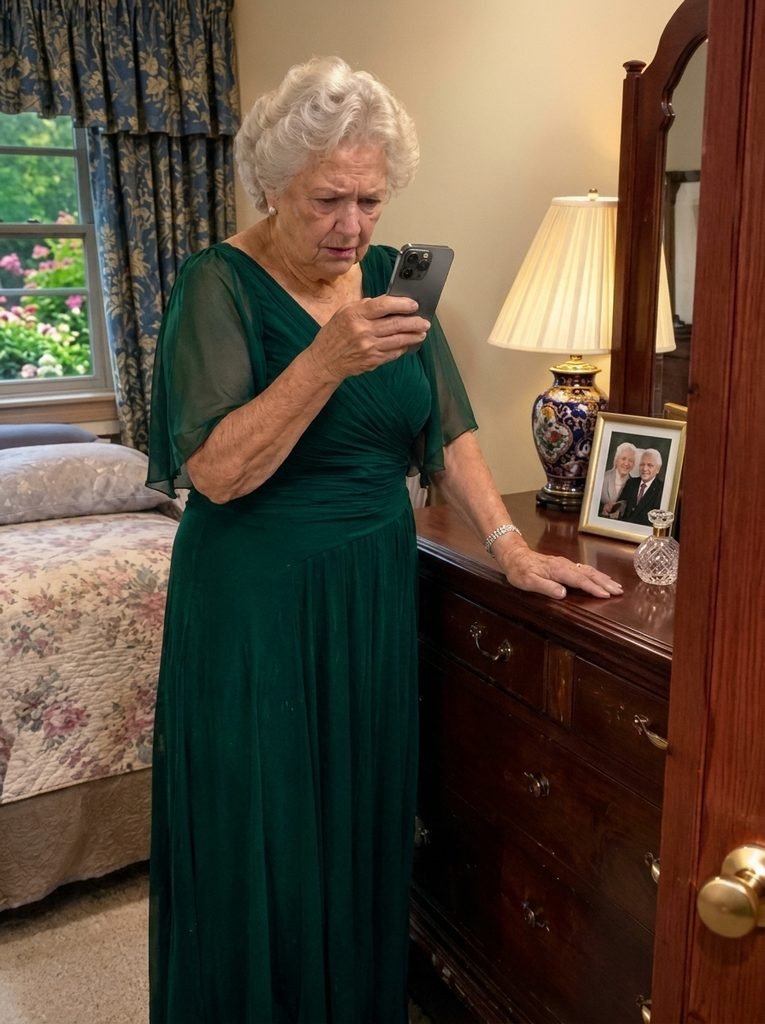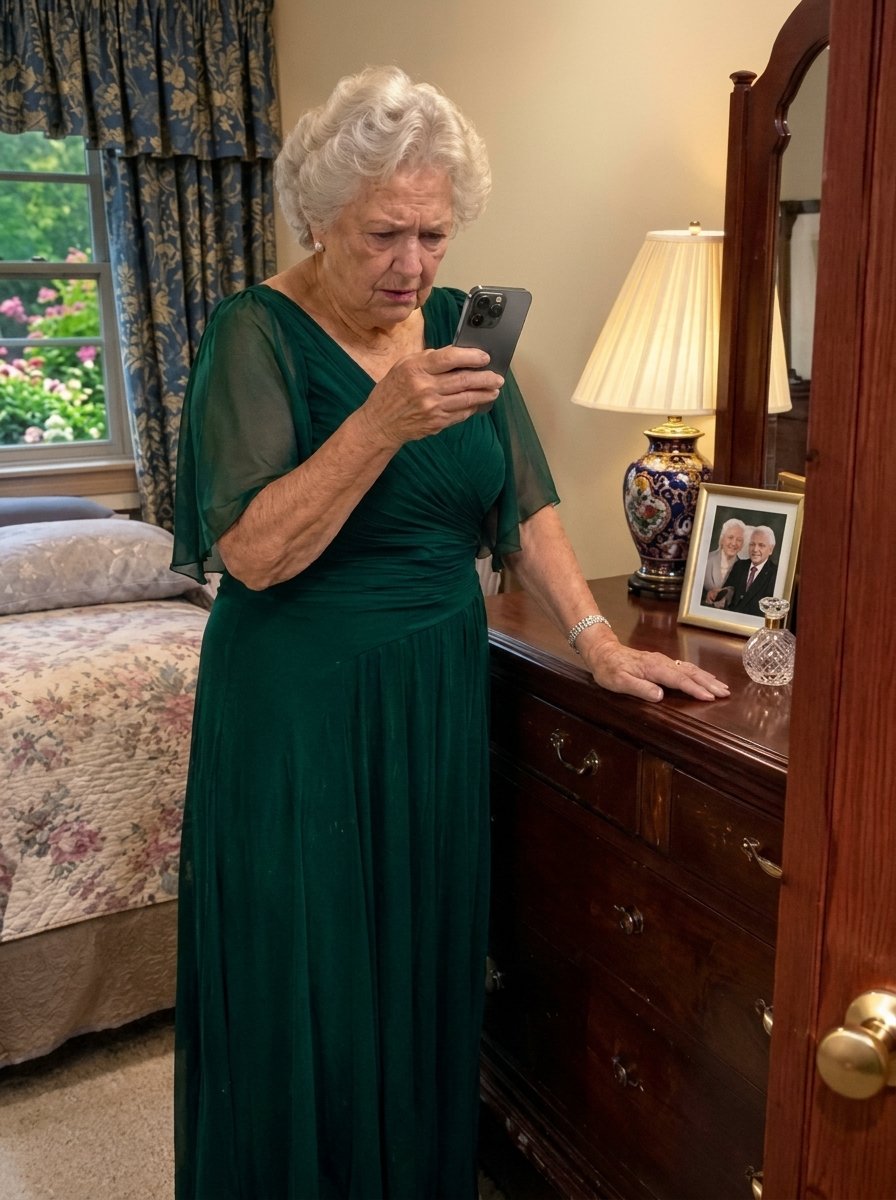
At seventy-seven, I dressed for a 7 p.m. family dinner in the pearl earrings my late husband gave me, never imagining my own children had planned to leave me sitting alone at that table.
He had called eleven times in less than an hour. Genevieve had called six times. There were also messages from numbers I recognized as belonging to companies that had been receiving payments from my accounts.
I placed the cup on the table and walked toward the door.
“Mom! Open the door!”
Benjamin sounded furious.
Not worried.
Not confused.
Furious.
I unlocked the door but left the security chain attached.
He stood outside wearing an expensive gray jacket. His hair was untidy, and his face was red.
“Mom, what have you done?”
“Good morning, Benjamin.”
“Don’t good morning me. My mortgage payment was rejected.”
“I see.”
“My business insurance didn’t go through either.”
“That’s unfortunate.”
He stared at me.
“Unfortunate? Mom, do you understand what you’re doing?”
I looked at him carefully.
For a moment, I saw the little boy who used to run into my bedroom after a nightmare.
Then I saw the forty-nine-year-old man standing on my porch.
“I understand perfectly.”
“You’ve canceled everything!”
“Not everything. Only the payments I was making for your household and business.”
He ran a hand through his hair.
“Why would you do this without talking to me?”
I almost laughed.
“Benjamin, you informed me by text that your wife didn’t want me at dinner. You didn’t think that required a conversation either.”
He looked away.
“That was different.”
“How?”
“Genevieve had her reasons.”
“And what were they?”
He hesitated.
“She wanted the evening to be comfortable.”
I waited.
He sighed.
“Some of our guests are important people. She didn’t want any awkward conversations.”
I felt something tighten in my chest.
“Am I awkward, Benjamin?”
“No, Mom. That’s not what I meant.”
“Then explain what you meant.”
He didn’t answer.
Instead, he pushed his hands into his pockets.
“Look, can we put this behind us? I need you to restore the payments. We have bills due.”
I shook my head.
“No.”
His expression changed.
“Excuse me?”
“You heard me.”
“Mom, you can’t suddenly stop supporting us. We’ve made financial commitments based on those arrangements.”
“Those arrangements were made with my money.”
“You offered to help!”
“Yes. I did. Helping someone is not the same as promising to support them forever.”
He stared at me as though I’d spoken a foreign language.
Then he said something that made my heart ache.
“You’re seventy-seven. What do you even need all that money for?”
For several seconds, I couldn’t speak.
I looked at the man I’d raised, educated, comforted, and supported.
The man whose family had received $93,600 from me in one year.
Apparently, at seventy-seven, my money had become more useful to him than my company.
“I need it for the same reason you need yours,” I finally answered. “To live my life.”
He shook his head.
“You’re being emotional.”
“No, Benjamin. I’m finally being practical.”
He stepped closer to the door.
“Genevieve is going to be furious.”
“That’s between you and your wife.”
“She’s already dealing with enough.”
I looked at him.
“And what about me?”
He opened his mouth but didn’t respond.
That silence told me more than any argument could have.
I closed the door gently.
Through the glass, I watched him stand on the porch, staring at the house.
Then he turned and walked away.
I thought that would be the end of it.
I was wrong.
At 1:03 p.m., Genevieve sent me a message.
It was longer than Benjamin’s.
“Your decision is extremely irresponsible. You know how much our household depends on your assistance. You have put June’s stability at risk. I hope you’re satisfied.”
I read it twice.
Then I replied:
“June’s stability is your responsibility as her parents. I love her, and that will never change.”
Genevieve responded almost immediately.
“Don’t use June to justify punishing us.”
I put the phone down.
For years, I had accepted comments like that.
If I questioned a payment, I was being difficult.
If I declined to pay for something, I was making life harder for June.
If I asked why Benjamin needed money, I was told I didn’t understand modern expenses.
I had been trained to feel guilty for protecting my own savings.
That afternoon, I began reviewing the folder again.
I found something I hadn’t noticed the previous night.
A series of payments to an unfamiliar financial company called Northbridge Advisory.
They were substantial.
One transfer was $8,500.
Another was $12,000.
A third was $6,750.
I called Clara.
“Do you recognize this company?”
There was a pause.
“Let me check the records.”
I waited.
“Mrs. Kelley, these payments appear to have been authorized from your account, but they were directed to a business account associated with Benjamin.”
“Why?”
“I can’t determine the purpose from here.”
“Can you send me copies of the authorization documents?”
“Certainly. I would also recommend reviewing the underlying agreements with an independent attorney.”
I thanked her.
After hanging up, I sat motionless.
Thomas had always been careful with money.
He kept receipts for everything, even small purchases.
When we retired, he made sure our savings would last.
He used to say that financial independence was especially important in old age.
I had believed him.
But after his death, I had allowed Benjamin’s emergencies to become my daily responsibilities.
At 4:40 p.m., Wesley called.
My eldest son rarely called without a reason.
“Mom, what’s happening?”
I sighed.
“Your brother has been calling.”
“I know. He’s been calling me too.”
“What did he say?”
“That you’ve suddenly lost your temper and canceled all his financial arrangements.”
I closed my eyes.
“That’s one way to describe it.”
Wesley was quiet.
Then he asked:
“Did you finally stop paying for everything?”
“Yes.”
“Good.”
His answer surprised me.
“You’re not going to ask why?”
“Mom, I’ve been waiting for you to do this for years.”
I felt tears gathering.
“Wesley, I thought I was helping him.”
“You were helping him. But somewhere along the way, he started treating your help like something he was entitled to.”
I looked at Thomas’s photograph.
“Perhaps.”
Wesley lowered his voice.
“There’s something else you should know.”
My stomach tightened.
“What is it?”
“Benjamin has been telling people that you’re not entirely capable of managing your finances anymore.”
I stood up.
“What?”
“He said you’ve become forgetful. He mentioned that you’ve been making unusual financial decisions.”
I gripped the telephone.
“Who has he been telling?”
“I don’t know everyone. But he mentioned it to Aunt Margaret, and apparently he discussed it with someone at his bank.”
For a moment, the room seemed to tilt.
I was seventy-seven.
I occasionally forgot where I’d placed my reading glasses.
I sometimes entered a room and forgot why I’d gone there.
But I knew the balance of my accounts.
I knew the amount I’d transferred to Benjamin’s household.
I knew exactly why I had canceled the payments.
And I knew what had happened at 6:18 the previous evening.
“Wesley, why would your brother say that?”
“I don’t know, Mom.”
I lowered myself into the chair.
Then Wesley added:
“Be careful. He’s not only upset about the money.”
“What do you mean?”
“He asked me whether Dad had ever changed his will.”
My heart began beating faster.
Thomas had died four years earlier.
His estate had been settled properly.
Everything had been documented.
“Why would Benjamin ask that?”
Wesley hesitated.
“Because he thinks there might be something he doesn’t know about.”
After we ended the call, I went upstairs.
I opened Thomas’s old filing cabinet.
His estate documents were still there.
The will.
The trust papers.
The property records.
And a sealed envelope with my name written in his handwriting.
I had never opened it.
Thomas had asked me to keep it until I felt I needed it.
I sat on the edge of the bed and carefully broke the seal.
Inside was a letter.
It began:
“My dearest Eleanor,
If you are reading this, I hope you have found the courage to put yourself first.”
I stopped.
My hands were trembling.
The letter continued.
“Over the years, I have watched you give Benjamin more than money. You have given him your peace, your time, and sometimes your dignity.
I know you love him.
But love should never require you to disappear.”
I pressed the letter against my chest.
Then I read the final paragraph.
“If he ever begins making decisions about your money, your home, or your future without your permission, speak to Margaret Ellis. She knows what we arranged, and she will help you.”
Margaret Ellis.
The name was familiar.
She had been Thomas’s attorney for nearly twenty-five years.
I had not spoken to her since the funeral.
I picked up the telephone.
And called her office.
PART 3 – THE THIRD PERSON
Margaret answered personally.
“Eleanor?”
Her voice sounded exactly as I remembered.
“Margaret, I need your help.”
She immediately became serious.
“What’s happened?”
I explained everything.
The dinner invitation.
The message from Benjamin.
The canceled payments.
The unfamiliar business account.
And Wesley’s warning that Benjamin had been questioning my ability to manage my finances.
Margaret listened without interrupting.
When I finished, she asked one question.
“Have you signed anything recently that gives Benjamin authority over your finances?”
“No.”
“Any power of attorney?”
“No.”
“Any document concerning your house?”
“No. At least, not that I remember.”
“Good. Don’t sign anything until we have reviewed everything.”
I felt a small sense of relief.
Then Margaret said something unexpected.
“Eleanor, I think we should meet tomorrow. Bring every document you have concerning those payments.”
“Why?”
“Because I remember something Thomas told me shortly before he died.”
I held my breath.
“What?”
“He was concerned that Benjamin might eventually confuse your generosity with a legal right to your assets.”
I closed my eyes.
Thomas had seen something I refused to see.
“Margaret, did he leave anything else?”
“Yes. But I’d prefer to explain it in person.”
We arranged to meet the following morning.
At 9:30, Margaret arrived at my house carrying a leather briefcase.
She was seventy-one, with silver hair and a calm expression.
She sat at the kitchen table.
For nearly two hours, we reviewed the documents.
She examined the transfers.
She separated legitimate household assistance from business payments.
She made notes about Northbridge Advisory.
Then she asked me something that made my blood run cold.
“Has Benjamin ever asked you to sign a document concerning your home?”
I thought carefully.
“Not directly.”
“Has he ever brought documents to your house?”
I remembered something.
Six months earlier, Benjamin had visited with a folder.
He said he wanted to update some family paperwork.
He’d asked me to sign a document acknowledging that I was happy for him to handle certain administrative matters if I ever became unable to do so.
I had declined.
He’d laughed and said it was only a precaution.
I told Margaret.
Her expression changed.
“Did you keep a copy?”
“No.”
“Do you remember the title?”
I shook my head.
She wrote something down.
Then she opened Thomas’s letter.
I handed it to her.
She read it slowly.
When she reached the final paragraph, she nodded.
“Your husband was a very thoughtful man.”
“What did he arrange?”
Margaret opened her briefcase and removed a thick envelope.
“Before Thomas died, he established a family protection trust. You are the primary beneficiary and retain control over your personal finances and residence.”
I stared at her.
“I remember discussing something like that.”
“You did more than discuss it. You signed the documents. Thomas wanted to ensure that nobody could pressure you into transferring your home or savings.”
She placed a copy on the table.
“Your house is protected under the arrangements he established. Your children have no automatic right to it.”
I began crying.
Not because of the money.
Because Thomas had understood my weakness long before I did.
Margaret handed me a tissue.
“There is another matter.”
“What?”
“Thomas also asked me to keep records of certain financial arrangements involving Benjamin.”
My heart began pounding.
“What arrangements?”
Margaret opened another folder.
Inside were copies of loan agreements, transfers, and correspondence.
I recognized several payments.
The townhouse down payment.
The remodeling contribution.
A business loan.
And a substantial transfer from four years earlier.
“Why do you have all this?”
“Because some of the money Thomas and you provided was documented as loans, not gifts.”
I stared at her.
“I thought those were gifts.”
“Some were. Others were loans. Thomas was very specific about that distinction.”
I felt dizzy.
“Does Benjamin know?”
“He signed the agreements.”
I remembered the day.
Benjamin had been in financial trouble.
Thomas had insisted that everything be documented.
I had complained that paperwork was unnecessary between family members.
Thomas had simply smiled.
“One day, you’ll understand.”
Now I did.
Margaret gathered the documents.
“I want to examine the Northbridge payments more closely. We also need to establish whether anyone has attempted to obtain financial authority over your accounts without your informed consent.”
I nodded.
“Whatever you need.”
At 11:52, the doorbell rang.
Margaret looked at me.
“Are you expecting someone?”
“No.”
I approached the front door.
Benjamin stood outside.
But he wasn’t alone.
Genevieve was beside him.
And between them stood a tall, silver-haired man carrying a black leather folder.
I recognized him immediately.
It was Richard Coleman.
Benjamin’s attorney.
I had met him once at a business event.
He was the man who had congratulated Benjamin on his successful company expansion.
I opened the door.
“Good morning.”
Benjamin didn’t return the greeting.
“We need to talk.”
“I believe we’ve already talked.”
He looked over my shoulder.
Then he saw Margaret sitting at the table.
His expression changed.
“Why is she here?”
Margaret stood.
“Good morning, Benjamin.”
He looked at her.
Then at Richard.
Something passed between them.
I noticed it.
So did Margaret.
Richard stepped forward.
“Mrs. Kelley, we’d like to discuss some concerns about your recent financial decisions.”
I felt my blood run cold.
“What concerns?”
Benjamin answered before Richard could.
“Mom, we’ve spoken to people who are worried about you.”
I looked at him.
“Which people?”
He glanced at Genevieve.
She stepped forward.
“We’re worried that you’re not thinking clearly. This sudden decision to cancel so many payments is completely unlike you.”
I almost smiled.
“Perhaps that’s because I’ve never been given a reason to cancel them before.”
Richard opened his folder.
“We have a document we’d like you to review.”
He placed several pages on the table.
At the top was a title I recognized from the description Margaret had just given me.
A financial power of attorney.
My hands became cold.
Benjamin pulled out a chair.
“Mom, this is for your protection.”
I looked at the signature line.
Then I looked at him.
“Why would I need you to control my finances?”
He sighed impatiently.
“Because you’re getting older.”
Margaret stepped forward.
“Mrs. Kelley already has independent legal representation.”
Richard turned toward her.
“Then perhaps we can discuss this professionally.”
“Certainly,” Margaret replied.
She picked up the document.
After reading the first page, her expression became very serious.
“Where did this come from?”
Richard answered.
“It is a proposed arrangement.”
Margaret turned another page.
Then another.
Finally, she placed it on the table.
“Benjamin, is this your signature?”
He looked uncomfortable.
“Yes.”
“And did your mother authorize you to prepare this document?”
He didn’t answer.
Margaret looked at Richard.
“Has this document been presented to any financial institution?”
Richard hesitated.
“That isn’t relevant to today’s discussion.”
“It is extremely relevant.”
The room fell silent.
Then Margaret removed a second document from her briefcase.
It was a copy of Thomas’s trust agreement.
She placed it beside the power of attorney.
“Before anyone discusses Eleanor’s ability to manage her affairs, I suggest we establish exactly what authority she has already retained.”
Benjamin looked at the document.
His face changed.
“What’s that?”
Margaret answered calmly.
“Your father’s estate planning arrangements.”
He picked it up.
His eyes moved across the first page.
Then the second.
And when he reached the final section, he looked at me with an expression I’d never seen before.
Fear.
“Mom,” he whispered.
“Yes?”
“Why didn’t you tell me about this?”
I looked at him.
“Because it wasn’t your business.”
Genevieve stepped closer.
“Benjamin, what is it?”
He didn’t answer.
Margaret closed her briefcase.
“Perhaps everyone should sit down. There are several matters we need to clarify.”
And then she said the words that changed everything.
“Before we begin, I should inform you that Eleanor’s home and protected assets cannot be transferred simply because a family member believes he is entitled to them.”
Benjamin dropped the papers onto the table.
“That’s not what we’re trying to do!”
I looked directly at him.
“Then what are you trying to do?”
He opened his mouth.
Nothing came out.
And for the first time in fourteen years, Genevieve had nothing to say either.
But I had no idea that the most painful revelation was still waiting.
Because Richard slowly removed another paper from his folder.
It was a printed copy of an email.
And the sender was my son.
PART 4 – THE TRUTH THAT DESTROYED THE ILLUSION
Richard placed the email on the table.
I could see Benjamin’s name at the top.
The date was six weeks earlier.
I started reading.
The first paragraph was about my financial assistance.
The second discussed my age.
The third mentioned my house.
Then I reached a sentence that made my stomach turn.
“Once we have the necessary authority, we can consolidate the assets and avoid unnecessary complications later.”
I looked up.
“What does this mean?”
Benjamin stood immediately.
“That’s being taken out of context.”
“Then explain the context.”
He rubbed his forehead.
“Mom, this was a discussion about future planning.”
“What future planning?”
He looked at Richard.
The attorney seemed uncomfortable.
Genevieve interrupted.
“Benjamin was only trying to make sure everything was organized. You don’t understand how complicated these things become when someone gets older.”
I turned toward her.
“Do you think I’m incapable of understanding a document?”
“That’s not what I said.”
“Then what are you saying?”
She folded her arms.
“You’re making this much more dramatic than it needs to be.”
Margaret calmly picked up the email.
“Mrs. Kelley is entitled to understand every document concerning her property and financial affairs. We should proceed carefully.”
Benjamin suddenly raised his voice.
“This is ridiculous! I’m her son!”
I looked at him.
“Yes. You are.”
“Everything I’ve done has been for this family!”
“Then why did you tell me I wasn’t welcome at dinner?”
He went quiet.
“That was Genevieve’s decision.”
Genevieve’s face hardened.
“Don’t put this on me.”
“You sent the message,” Benjamin said.
“Because you agreed with me!”
Their argument continued.
I sat quietly.
It was strange.
For years, I had imagined that if I ever confronted them, I would shout.
I would cry.
I would demand explanations.
But now I felt something different.
I felt detached.
As though I were watching strangers argue in my kitchen.
Margaret finally interrupted.
“Let’s establish the facts.”
She asked Benjamin about the payments.
He admitted that some had supported his business.
He said others had covered family expenses.
Then she asked about Northbridge Advisory.
He hesitated.
“It’s a consulting arrangement.”
“What services does it provide?”
“Business development.”
“Who owns it?”
Benjamin looked at Richard.
Genevieve suddenly became interested in the floor.
Margaret repeated the question.
“Who owns Northbridge Advisory?”
Finally, Benjamin answered.
“I do.”
I felt my stomach tighten.
“You own it?”
He nodded.
“And you were using my money to fund it?”
“I was investing in the future.”
“Whose future?”
He didn’t answer.
Margaret requested the relevant records.
Benjamin refused.
Richard explained that the business records would need to be reviewed through appropriate legal channels.
Margaret nodded.
“That is acceptable.”
She turned toward me.
“Eleanor, I recommend that we conduct a complete review of all financial assistance provided to Benjamin, including the loans Thomas documented.”
I agreed.
Then I looked at my son.
“Benjamin, I want you to understand something.”
He raised his eyes.
“I love you. That has never changed.”
His expression softened slightly.
“But love doesn’t mean I must finance your life. It doesn’t mean I must accept humiliation. And it certainly doesn’t mean you get to decide whether I am capable of controlling my own money.”
He looked down.
For a moment, I thought he might apologize.
Instead, he said:
“So you’re really going to leave us without anything?”
I closed my eyes.
There it was again.
Not a question about my feelings.
Not an apology.
Just money.
I answered quietly.
“I’m leaving you with exactly what you should have had all along.”
“What’s that?”
“Your own responsibilities.”
Benjamin pushed his chair backward.
“This isn’t over.”
“No,” I said. “It isn’t.”
He walked out.
Genevieve followed.
Richard remained for another minute, apologized for the confrontation, and promised to communicate through Margaret.
When the door finally closed, I sat down.
My hands were trembling.
Margaret poured me some tea.
“You did very well.”
“I don’t feel very well.”
“That’s understandable.”
I looked toward the window.
“Do you think my son hates me?”
Margaret considered her answer.
“I think your son is frightened. But what he does with that fear is his responsibility.”
That afternoon, I called Wesley and Serena.
I told them what had happened.
Serena came over immediately.
She brought groceries, flowers, and a warm blanket.
When she saw the documents on the table, she began crying.
“Mom, how did it get this far?”
I hugged her.
“I don’t know.”
She held me tightly.
“You don’t have to handle everything alone.”
That evening, June called.
Her little voice came through the telephone.
“Grandma?”
“Hello, sweetheart.”
“Are you still mad?”
My heart broke.
“No, darling. I’m not mad at you.”
“Mommy said you don’t want to help us anymore.”
I closed my eyes.
“June, Grandma loves you more than all the butterflies in the world.”
“Even the big blue ones?”
“Especially the big blue ones.”
She giggled.
“Can I come over?”
I looked at Serena.
She nodded.
“Of course, sweetheart. I’d love that.”
When June arrived the next afternoon, she ran into my arms.
She carried a drawing.
It showed a little house, a large tree, and three people holding hands.
One person had silver hair.
“That’s you, Grandma.”
I kissed her forehead.
“It’s beautiful.”
“Can we plant flowers together?”
“Yes.”
“And can I sleep over?”
“Absolutely.”
For the first time since the dinner invitation had been canceled, I felt something warm return to my heart.
My relationship with June did not have to depend on the money I gave her parents.
I could love her without financing her household.
And that was an important distinction.
PART 5 – THE FINAL RECKONING
The financial review took several weeks.
Margaret worked with an independent accountant.
They examined every transfer, every automatic payment, and every agreement.
The results were difficult to accept.
Some payments had been legitimate family assistance.
Others were loans.
Several had been described to me as temporary emergencies but had continued for years.
The Northbridge Advisory transfers were especially concerning.
The accountant discovered that Benjamin had used several payments to support business expenses that he had never explained to me.
There was no immediate conclusion that every transaction was improper.
But there was enough to justify a formal accounting and legal review.
Margaret sent a written request for records.
Benjamin responded through Richard.
For the first time in years, conversations about money were happening through professionals instead of emotional phone calls.
I also changed my banking arrangements.
I removed unnecessary access.
I replaced passwords.
I reviewed every standing authorization.
I arranged for monthly statements to be sent directly to me.
Clara helped me organize everything.
One morning, she looked at the completed list.
“Mrs. Kelley, you have more money available for your own retirement than you probably realized.”
I smiled sadly.
“I always knew I had savings. I just seemed to spend them before I could enjoy them.”
“Well, perhaps that’s about to change.”
She was right.
I began taking walks again.
I joined a local gardening club.
I started attending a weekly book group.
And I finally booked the trip Thomas and I had talked about for years.
We had always wanted to visit the coast of Maine.
He loved the sea.
He used to say that the sound of waves made him feel as though the world had forgiven him for something.
I booked a small room overlooking the water.
I planned to go in the spring.
Not because I needed to prove anything to Benjamin.
Because I wanted to.
Meanwhile, Benjamin’s situation became more complicated.
Without my financial assistance, he had to restructure his household budget.
He sold his expensive car.
He canceled the country club membership.
He reduced several business expenses.
Genevieve was furious.
According to Wesley, they argued frequently.
One evening, Benjamin called me.
I almost didn’t answer.
But something told me to listen.
“Mom?”
“Hello, Benjamin.”
There was a long silence.
Then he said:
“Can we talk?”
“About what?”
“Everything.”
I sat down.
“All right.”
He sounded tired.
“Things have been difficult.”
I didn’t respond.
“The mortgage is behind. The business is struggling. Genevieve is upset. June keeps asking why you don’t visit.”
I felt a familiar ache.
“Benjamin, I miss June too.”
“I know.”
Another silence.
Then he said:
“I think we made a mistake.”
I waited.
“About the dinner?”
“About a lot of things.”
I wanted to hear him say it.
I wanted him to acknowledge what he had done.
But he continued.
“Maybe we shouldn’t have canceled the invitation.”
I looked at the clock.
“Why did you cancel it?”
He sighed.
“Genevieve thought some of the guests might ask questions about the financial arrangements.”
“What financial arrangements?”
He was quiet.
“About how much you’ve helped us.”
I felt cold.
“Why would that matter?”
“She didn’t want people thinking we couldn’t afford our lifestyle.”
I leaned back.
“So you were embarrassed that your mother helped you?”
“No. That’s not what I mean.”
“Then explain it.”
He struggled to find the words.
“She wanted everything to look perfect.”
“And I would have spoiled that?”
“No, Mom.”
“But you agreed with her.”
He didn’t answer.
I finally said:
“Benjamin, I would have been happy to attend dinner. I would have been happy to see your home. I didn’t need an expensive meal or an elegant dining room. I only wanted to spend time with my family.”
“I know.”
“No. I don’t think you do.”
He began crying.
It was the first time I’d heard him cry in years.
“Mom, I’m sorry.”
I closed my eyes.
I had imagined those words countless times.
But when they finally came, they did not repair everything.
“Thank you for saying that.”
“Can we start over?”
I considered the question.
“Perhaps. But not the way things were before.”
“What does that mean?”
“It means I will not resume the payments. I will not finance your business. I will not pay your household bills. And I will not sign documents giving you authority over my finances.”
He breathed heavily.
“All right.”
“It also means that if you want a relationship with me, it must be based on something other than money.”
He was quiet for a long time.
Then he whispered:
“I understand.”
I hoped he did.
But I had learned that promises were not the same as change.
Three days later, Benjamin arrived alone.
He carried a small box.
I opened the door.
“Hello, Mom.”
“Hello.”
He looked nervous.
“I brought something.”
He handed me the box.
Inside were photographs.
Old family photographs.
Thomas holding Benjamin as a baby.
Benjamin standing beside his first bicycle.
Our family at a summer picnic.
And one photograph I’d almost forgotten.
Thomas and I were sitting on the porch, laughing.
Benjamin had taken it when he was fifteen.
I looked up.
“Why did you bring these?”
“I found them while going through some boxes.”
He swallowed.
“I thought you might like them.”
I nodded.
“Thank you.”
He stood awkwardly.
“Can I come in?”
I stepped aside.
We sat in the living room.
For nearly an hour, we talked about ordinary things.
His work.
June’s school.
The garden.
The weather.
He didn’t ask for money.
He didn’t mention the mortgage.
He didn’t complain about Genevieve.
It was almost like speaking to my son again.
Before leaving, he stood near the door.
“Mom?”
“Yes?”
“I know I can’t undo what happened.”
“No, you can’t.”
“But I’d like to try to make things better.”
I looked at him.
“Then start by respecting my decisions.”
He nodded.
And left.
I watched him walk down the driveway.
I didn’t know whether he would truly change.
But for the first time, I wasn’t making my peace dependent on what he did next.
PART 6 – THE DINNER I FINALLY DESERVED
Six months passed.
Spring arrived.
I took my trip to Maine.
I walked along the shore, collected small shells, and sat in a little café watching the waves.
I bought myself a beautiful blue scarf.
Thomas would have liked it.
I sent June postcards.
She sent drawings in return.
One showed a butterfly sitting on a flower.
Another showed me standing beside her in a garden.
She wrote:
“Grandma, I miss you. Love June.”
I kept every postcard.
Benjamin began visiting occasionally.
At first, he came once a month.
Then every few weeks.
Sometimes he brought groceries.
Sometimes he helped me carry things from the car.
He never again asked me to pay his bills.
Genevieve was slower to change.
For a while, she barely spoke to me.
Then one afternoon, she called.
“Eleanor, could we talk?”
I agreed.
She arrived alone.
She sat in the same living room where Richard had placed the power-of-attorney document months earlier.
She looked uncomfortable.
“I wanted to apologize.”
I waited.
“About the dinner.”
I nodded.
“And about the way I’ve treated you.”
Her voice became quieter.
“I was wrong.”
I studied her face.
“Why?”
She looked down.
“I was embarrassed. I thought people would judge us if they knew how much help we received.”
“So you decided I was the problem.”
She nodded.
“Yes.”
I appreciated the honesty.
But honesty did not erase the hurt.
“I need you to understand something, Genevieve. I never wanted to be treated like a guest of honor. I wanted to be treated like family.”
She began crying.
“I know.”
“No. You know now.”
She wiped her eyes.
“I hope someday we can have a better relationship.”
I nodded.
“That would be nice.”
I did not promise forgiveness.
I did not promise to forget.
I simply allowed the possibility of something better.
A month later, June celebrated her seventh birthday.
Benjamin invited me personally.
This time, he called.
“Mom, we’d love you to come. Saturday at two. Just family.”
I paused.
“Thank you for inviting me.”
“Will you come?”
I looked at the pearl earrings in their small velvet box.
Thomas had given them to me for our fiftieth anniversary.
I had not worn them since the night I’d been excluded from dinner.
“Yes,” I said. “I’d love to.”
On Saturday, I arrived at their townhouse.
The front garden was filled with balloons.
June spotted me immediately.
“GRANDMA!”
She ran across the lawn.
I bent down and hugged her.
She held me tightly.
“You came!”
“Of course I did.”
She looked at my ears.
“You’re wearing your pretty earrings!”
I touched the pearls.
“Yes, sweetheart.”
Benjamin stood by the doorway.
For a moment, our eyes met.
He looked at me with something that resembled regret.
Then he stepped forward.
“Mom, welcome.”
It was a simple sentence.
But it meant something.
Inside, the house was full of children, relatives, and neighbors.
There was a birthday cake decorated with butterflies.
June showed me her presents.
She introduced me to her friends.
And when it was time to eat, she insisted I sit beside her.
I looked around the table.
No one seemed uncomfortable.
No one appeared embarrassed.
No one asked me to leave.
For the first time in a long time, I felt welcome.
After the party, Benjamin walked me to my car.
“Mom?”
“Yes?”
“I’ve been thinking about Dad.”
I smiled faintly.
“Me too.”
“He would have been disappointed in me.”
I didn’t answer immediately.
Then I said:
“He would have wanted you to become a better man.”
Benjamin nodded.
“I know.”
He looked down.
“I don’t expect you to forget everything.”
“Good.”
“But I hope you can forgive me eventually.”
I reached for his hand.
“Forgiveness isn’t a switch, Benjamin. It takes time. And trust takes even longer.”
He squeezed my fingers.
“I understand.”
I got into the car.
Before driving away, I looked at him.
“Benjamin?”
“Yes, Mom?”
“Next time you invite me to dinner, don’t worry about what the guests will think.”
He smiled sadly.
“I won’t.”
I drove home.
The evening sky was turning pink.
When I entered my house, I placed my pearls in their velvet box.
Then I went to Thomas’s photograph.
I looked at his familiar smile.
“You were right,” I whispered.
I remembered his words.
You can’t spend your entire life keeping someone from falling.
For years, I had mistaken financial support for love.
I had believed that being needed was the same as being valued.
I had allowed guilt to become a permanent part of my life.
But at seventy-seven, I finally learned something important.
A mother can love her son without paying his mortgage.
A grandmother can adore her granddaughter without financing her parents.
And an older woman can say no without becoming selfish.
The 174 payments had stopped.
My love had not.
My generosity had not disappeared.
But I had finally learned that generosity must be a choice, not an obligation.
That night, I made myself a cup of tea in Thomas’s porcelain cup.
I sat beside the window.
For the first time in years, the silence in my house didn’t feel lonely.
It felt peaceful.
And I realized something else.
The greatest gift I could leave my children was not a house, a bank account, or a lifetime of paid bills.
It was the example of a woman who finally understood her own worth.
I was seventy-seven years old.
I had lost my husband.
I had been rejected by my son.
I had discovered that the people I loved had become comfortable with my sacrifices.
But I was still here.
Still capable of making decisions.
Still capable of loving.
Still capable of beginning again.
And if there was one thing I wanted every mother, grandmother, and woman reading my story to understand, it was this:
Never spend your final years proving your love to people who only measure it by what you give them.
You deserve to be invited because you are family.
You deserve respect without having to pay for it.
And you deserve to enjoy the life you worked so hard to build.
That evening, I turned off the lights, locked my front door, and went upstairs.
I didn’t check my phone.
I didn’t wait for another request.
I didn’t wonder which bill needed paying.
For once, I went to bed thinking only about tomorrow.
And tomorrow belonged to me.
THE END.