If you are reading this, then I am gone, and your father, mother, and sister have probably already convinced themselves that they won.
Do not confront them yet.
Do not tell Raymond everything.
And above all, do not sign anything they put in front of you.
I stopped.
Raymond Vance.
The attorney who had read the will.
Why shouldn’t I tell him everything?
I continued reading.
For twenty-seven years, your father has been taking money from me. At first, I believed he was simply struggling. He asked for help with his business, his mortgage, and his investments. I gave him money because he was my son.
But eventually, I discovered that he had been doing something far worse.
He had been transferring money from accounts that did not belong to him. He had used my signature without permission, created companies in other people’s names, and sold properties that I had never authorized him to sell.
Your mother knew.
Chloe benefited from it.
And Raymond knows more than he has admitted.
I lowered the letter.
My father?
The same man who had told me I was incapable of managing real assets?
My own father had been stealing from an elderly man who could barely walk?
I looked toward the safe.
There were three flash drives.
One was labeled PROPERTY.
The second was labeled BANKING.
The third simply said THE ORIGINALS.
I connected the first drive to my laptop.
A spreadsheet appeared.
It contained dozens of properties, bank transfers, dates, account numbers, and company names. Some transactions went back almost twenty years.
I recognized the pattern immediately.
My father had created several limited liability companies. Each company appeared to own a different property, but the beneficial ownership records connected them to the same small group of people.
One of those people was my mother.
Another was Chloe.
I opened a folder titled SIGNATURES.
My grandfather’s signature appeared on dozens of documents.
Some were legitimate.
Others were obvious forgeries.
I knew because the signatures had been scanned and reused. Even the tiny ink imperfections were identical.
Someone had copied his signature from an old document and pasted it onto new ones.
Then I found something that made my stomach turn.
A transfer of $480,000 had been made from my grandfather’s investment account to a company registered in my sister’s name.
The description read:
EDUCATIONAL AND FUTURE SECURITY GIFT.
Chloe had never attended college.
She had spent the last four years traveling, buying designer handbags, and posting photographs from expensive hotels.
I opened another file.
This one contained bank statements.
More than $3.2 million had disappeared over several years.
And there was something else.
A property deed for a house in Connecticut.
I recognized the address.
It was the house my grandfather had supposedly sold five years earlier.
But the deed showed that ownership had never legally left his estate.
The sale had been fabricated.
Someone had created a fake buyer and transferred the property through a company controlled by my father.
I leaned back.
This wasn’t simply family dishonesty.
It was a financial crime.
And the evidence was sitting in my grandfather’s safe.
I returned to the letter.
There was another page.
Genevieve, you have always been the one who asked questions. When you were twelve, you noticed that a contractor had charged me twice for the same repair. When you were sixteen, you caught your father lying about a missing envelope of money.
You thought I had forgotten those things.
I never did.
Your father has always underestimated you. That is his greatest weakness.
I have not told you everything because I wanted you to live your own life without being dragged into this family’s darkness.
But the time has come.
There is one more thing you must understand.
The will Raymond read at my funeral is not the final version of my estate plan.
I stared at the page.
Not the final version?
I flipped through the remaining documents.
There was a copy of a notarized trust agreement dated four months earlier.
The document named me as the primary beneficiary of a private family trust.
The assets listed included several properties, investment accounts, and a commercial building in downtown Hartford.
The estimated value was more than $8 million.
I read the document again.
Then again.
My grandfather had left me almost everything.
But why had Raymond announced a different will?
The letter answered that question.
I have reason to believe Raymond has been cooperating with your father. I cannot prove how deeply he is involved, but I know he has withheld information from me.
The sealed envelope contains the name of the attorney who prepared the final trust documents. Contact her directly.
Her name is Eleanor Whitmore.
She knows the truth.
I reached into the safe again.
Beneath the documents was a small black envelope.
Inside was a business card.
ELEANOR WHITMORE ESTATE AND TRUST LITIGATION
On the back, my grandfather had written a telephone number.
Underneath it was another sentence.
There is a recording. Listen to it before you decide whom to trust.
I inserted the second flash drive.
A folder appeared.
RECORDINGS.
There were twelve audio files.
I clicked the first.
My grandfather’s voice filled the quiet room.
“Arthur, I am asking you one last time. Where is the money?”
My father’s voice answered.
“You’re confused, Dad. We’ve discussed this.”
“I’m not confused. I have the statements.”
“Those statements don’t mean what you think they mean.”
“Three million dollars, Arthur. Where did it go?”
There was a long silence.
Then my father spoke.
“You gave me power of attorney. You trusted me to manage things.”
“I trusted you to help me pay bills. I never trusted you to empty my accounts.”
“You were getting old. Someone had to make decisions.”
“Not decisions that made you rich.”
A chair scraped against the floor.
Then my father’s voice became colder.
“You should be grateful I kept this family together.”
My grandfather laughed weakly.
“Kept it together? You stole from your own father.”
The recording ended.
I sat motionless.
I had heard my father shout before. I had heard him threaten people. I had watched him intimidate employees and humiliate relatives.
But I had never heard him speak to my grandfather that way.
I opened the next recording.
It was a conversation between my mother and father.
“Arthur, what happens if he changes the will?”
“He won’t.”
“How can you be sure?”
“Because Raymond is handling it.”
“And Genevieve?”
“She’s too busy playing nurse to notice anything.”
My mother’s voice lowered.
“What if she does?”
“She won’t. She doesn’t know anything about money.”
My sister laughed in the background.
“She’s not exactly the brightest person in the family.”
I closed my eyes.
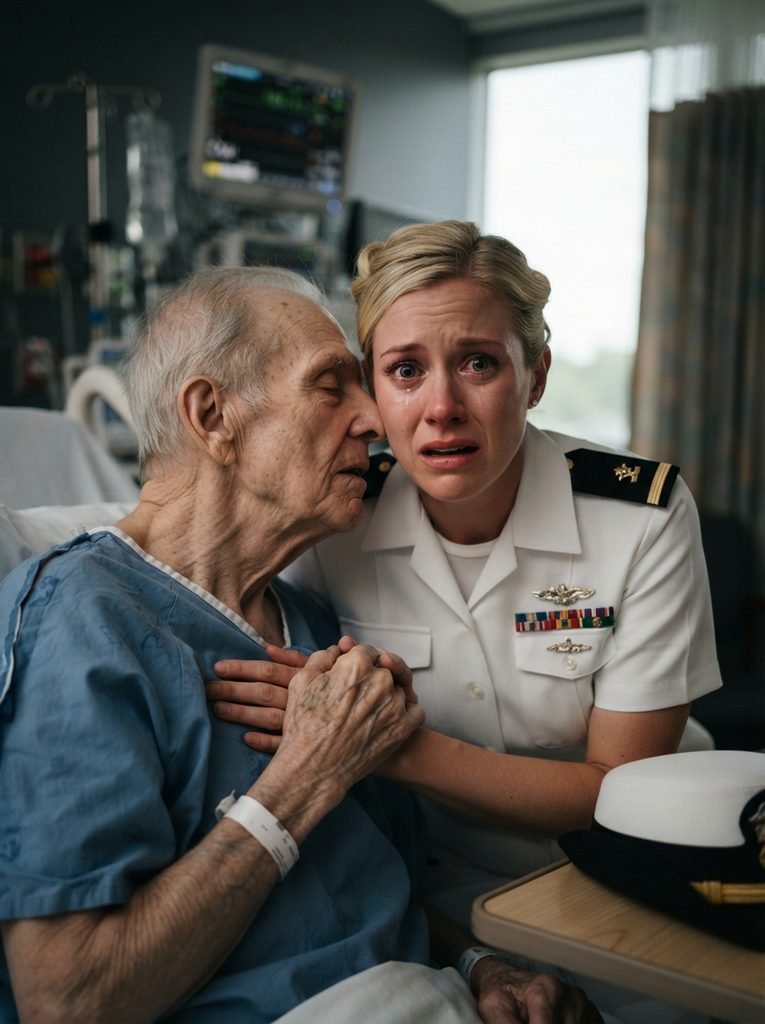
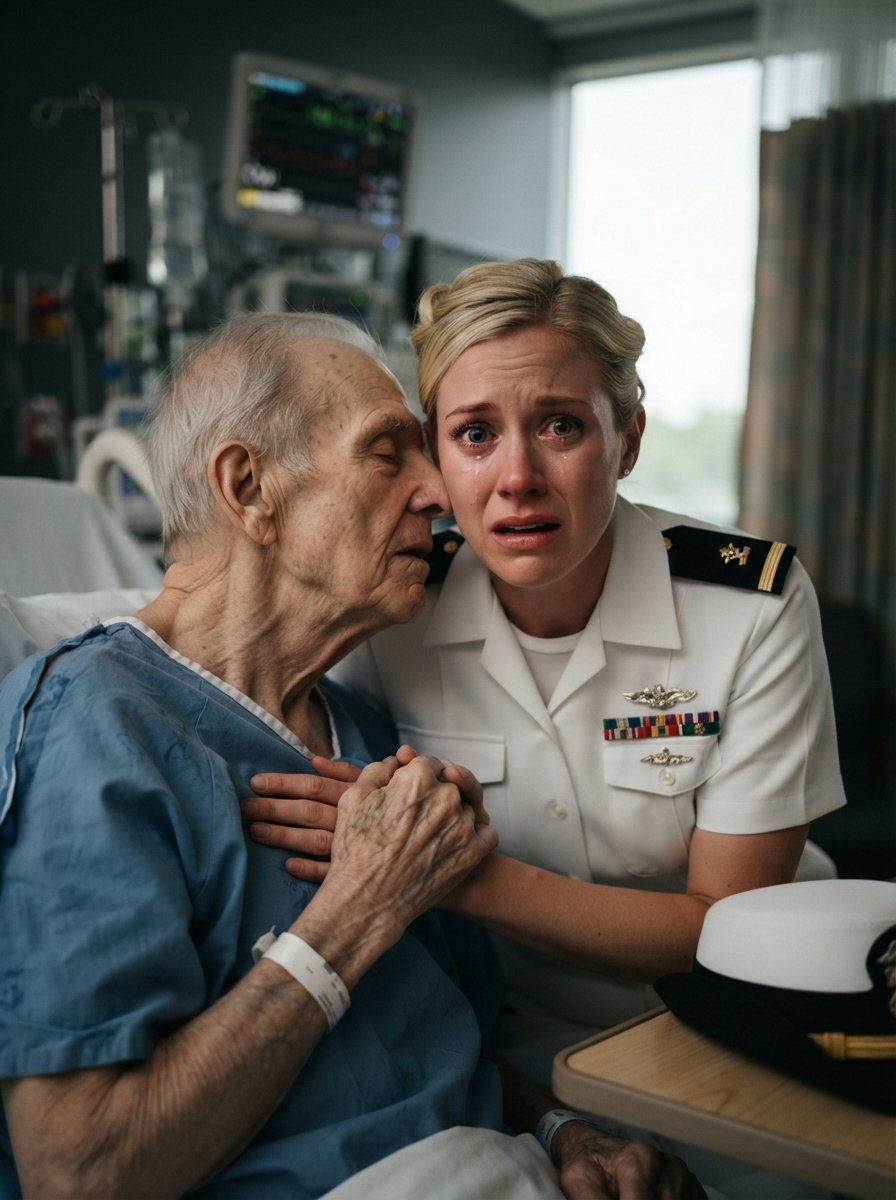
For six months, I had sat beside my grandfather while he struggled to breathe.
I had held his hand through nights when he cried from pain.
I had cleaned his wounds, prepared his meals, and listened to him talk about his childhood.
And while I was doing all of that, my family had been laughing about me.
The worst part was that they believed I was completely unaware.
My phone suddenly rang.
I nearly dropped it.
The screen displayed my father’s name.
I let it ring twice before answering.
“Hello?”
“Where are you?”
“At home.”
“Which home?”
I glanced at the safe.
“Mine.”
He sighed impatiently.
“Your grandfather’s house. Have you removed your belongings?”
“Not yet.”
“I told you we need the property cleared. The real estate agent is coming tomorrow.”
“I thought you were listing it this week.”
“We are. So don’t make this difficult.”
I looked at the documents spread across the floor.
“Did Grandfather leave anything else?”
There was a pause.
“What do you mean?”
“Anything besides the music box?”
“Why?”
“Just curious.”
His voice sharpened.
“Genevieve, don’t start imagining things. You received what was left to you. That’s more than enough.”
I almost laughed.
“Of course, Dad.”
“And one more thing. Raymond needs you to sign some paperwork tomorrow. It concerns the transfer of the remaining household assets.”
“What paperwork?”
“Nothing complicated. Just administrative.”
“I’ll read it first.”
He exhaled sharply.
“Why do you always have to make everything difficult?”
“Good night, Dad.”
I ended the call.
For the first time in my life, I wasn’t afraid of disappointing him.
I was afraid of what he might do when he discovered that I knew the truth.
I placed every document back into the safe, photographed the contents, and made encrypted copies of the digital files.
Then I called Eleanor Whitmore.
She answered after the fourth ring.
“Whitmore.”
“My name is Genevieve. My grandfather was Thomas Bennett.”
Silence.
Then I heard her inhale.
“Thomas’s granddaughter?”
“Yes.”
“Is he—”
“He passed away yesterday.”
Her voice softened.
“Oh, Genevieve. I’m so sorry.”
“He left me your number. He said you knew about a trust.”
Another silence.
“Are you somewhere private?”
“Yes.”
“Then listen carefully. Do not sign anything your father gives you. Do not discuss the contents of your grandfather’s safe with Raymond Vance. And whatever happens, do not let anyone remove the original documents.”
My throat tightened.
“Why?”
“Because your grandfather spent the last year trying to protect you from your own family.”
“How much did he leave me?”
Eleanor exhaled.
“That is not the first question you should be asking.”
“Then what is?”
“Whether your father knows that the final trust has already been activated.”
I stared at the safe.
“What happens if he finds out?”
Eleanor’s voice became very serious.
“Then he may do something desperate.”
At that exact moment, headlights swept across the living room window.
A car had pulled into the driveway.
I moved toward the curtain.
My father’s black Mercedes sat outside.
He had come back.
And he wasn’t alone.
My mother was in the passenger seat.
Chloe was in the back.
All three doors opened.
They were coming toward the house.
I looked at the safe.
Then at the portrait.
And finally at my phone.
Eleanor was still speaking.
“Genevieve? Are you there?”
I whispered, “They’re here.”
“Who?”
“My family.”
“Do not let them inside.”
A fist struck the front door.
“GENEVIEVE!” my father shouted.
Then another.
“OPEN THIS DOOR!”
I looked through the glass.
My father wasn’t smiling anymore.
And in his hand was a folder.
A folder with my name on it.
PART 3: THE FAMILY THAT WANTED ME SILENT
I didn’t open the door.
Instead, I moved the original documents into a locked fireproof case and carried the flash drives upstairs.
My grandfather had installed security cameras throughout the property after a break-in several years earlier.
I opened the camera application.
The front-door camera showed my father pacing.
My mother was whispering something to Chloe.
Chloe was looking through the window.
Then my father raised the folder and struck the door again.
“Genevieve! We know you’re in there!”
I called Eleanor back.
“They’re refusing to leave.”
“Have you told them about the safe?”
“No.”
“Good. Keep it that way. I’m contacting the authorities and arranging for an investigator to meet us tomorrow.”
“What about the trust?”
“I’ll explain everything in person.”
The knocking became louder.
“OPEN THE DOOR!”
I finally spoke through the intercom.
“What do you want?”
My father looked directly at the camera.
“Your signature.”
“On what?”
“An estate authorization. We need to settle a few things.”
“Email it to me.”
“Don’t be ridiculous. Open the door.”
“I’ll review it tomorrow.”
His face changed.
“Listen to me, young lady. This is still my father’s house. I am his son. You have no right to keep me outside.”
“Then why are you asking for my signature?”
He didn’t answer.
My mother stepped forward.
“Genevieve, sweetheart, we’re all grieving. Let’s not turn this into an argument.”
I almost admired her performance.
She had spent six months avoiding her dying father-in-law. Now she was calling me sweetheart.
“What does the document authorize?” I asked.
“Just a few routine transfers,” she replied.
“Which transfers?”
Chloe rolled her eyes.
“Oh my God. Are we seriously doing this?”
My father turned toward her.
“Be quiet.”
Then he looked back at the camera.
“Your grandfather wasn’t thinking clearly near the end. You know that. We need to correct some mistakes before this gets complicated.”
There it was.
The first attempt to discredit a dead man.
I pressed the intercom button.
“Good night.”
My father stepped toward the door.
“If you don’t open this door, you’ll regret it.”
I ended the connection.
For several minutes, nobody moved.
Then my phone buzzed.
A message from an unknown number.
YOU HAVE NO IDEA WHAT YOU’RE GETTING YOURSELF INTO.
I took a screenshot.
A second message appeared.
GRANDPA WASN’T THE ONLY ONE WITH SECRETS.
I knew immediately who had sent it.
Chloe.
I blocked the number.
At 11:42 p.m., the three of them finally left.
I didn’t sleep.
The following morning, I met Eleanor at her law office.
She was in her late sixties, with silver hair, sharp eyes, and the kind of calm that made people instinctively lower their voices.
She placed a thick file on the desk.
“Your grandfather came to see me fourteen months ago.”
“Why?”
“He discovered that your father had used his power of attorney to transfer assets without permission. At first, Thomas wanted to confront him privately. He still loved his son.”
“Did he know my mother was involved?”
Eleanor nodded.
“Unfortunately, yes.”
“And Chloe?”
“She received money from the fraudulent transfers. Whether she understood the entire arrangement is something the investigation will determine.”
I looked down at the file.
“Why did Raymond read a different will?”
Eleanor folded her hands.
“Because the document he read was an older will. Your grandfather revoked it legally and executed a new estate plan through my office.”
“Can he do that without telling the family?”
“Absolutely. An individual with legal capacity can generally change their estate plan as they choose, subject to applicable law and the terms of any existing trusts.”
“Was he mentally capable?”
Eleanor slid a medical assessment across the desk.
“Two independent physicians confirmed that he understood his decisions.”
I read the dates.
Both examinations had taken place shortly before the new trust was signed.
“What happens now?”
“Your grandfather placed several assets into a trust. The documents name you as the primary beneficiary and appoint an independent professional trustee.”
“How much is the trust worth?”
“Approximately $8.4 million, based on the most recent valuations.”
I stared at her.
Eight million dollars.
It was more money than I had ever imagined possessing.
But Eleanor wasn’t finished.
“There’s also the matter of the missing assets.”
She opened another folder.
“Your grandfather documented approximately $3.7 million in unauthorized transfers. Some money went into companies connected to your father. Some went into your mother’s accounts. And some went toward property purchases.”
“Can it be recovered?”
“Potentially. That depends on the evidence, the applicable limitation periods, and what investigators establish.”
I remembered the recordings.
“There’s audio.”
Eleanor nodded.
“Thomas told me. I haven’t heard all of it.”
“I have three flash drives.”
“Then we need to preserve them properly.”
She made a note.
“There’s something else.”
She pulled out a photograph.
It showed my grandfather sitting in a hospital room, holding a document.
On the back was a handwritten date.
Two months before his death.
“Your grandfather asked me to arrange one final meeting with him,” Eleanor said.
“Why?”
“He wanted to make sure you would never be left homeless or financially dependent on your father.”
My eyes burned.
“He knew.”
“He knew what your father was capable of. And he knew you would be the one left to deal with the consequences.”
I looked away.
“Why didn’t he tell me?”
“Because he didn’t want the final months of his life to become a war between you and your family.”
I swallowed.
“I would have helped him.”
“I know.”
For a moment, neither of us spoke.
Then Eleanor reached for another envelope.
“Your grandfather left this with me. He instructed me to give it to you after the funeral.”
I opened it.
Inside was a handwritten note.
My dearest Genevieve,
I know you will wonder why I did not tell you everything while I was alive.
The truth is that I was ashamed.
I raised your father to believe that honesty mattered. Somewhere along the way, he became a man who believed that money mattered more.
I watched him change.
I watched your mother excuse him.
I watched Chloe learn that she could receive anything she wanted without earning it.
And I watched you become the only person in this family who still understood the difference between love and obligation.
You gave me six months of your life.
I wish I could give you six months back.
But I cannot.
So I have given you something else.
The truth.
Do not use it to become like them.
Use it to become free.
I love you more than you will ever know.
Grandfather.
I pressed the letter against my chest.
For the first time since his death, I cried.
Not because of the money.
Not because of the betrayal.
Because he had known how alone I felt.
And he had still found a way to reach me.
Two days later, my father made his next move.
He called a family meeting.
The invitation came through a group message.
Everyone at the house. Sunday, 6 p.m. We need to resolve Grandfather’s estate.
I almost declined.
Then I remembered Eleanor’s warning.
“Let them talk,” she had said. “Don’t volunteer information. Don’t sign anything. And document every interaction.”
So I went.
My father was seated at the head of the dining table.
My mother sat beside him.
Chloe was scrolling through her phone.
Raymond Vance stood near the fireplace.
The same fireplace where Grandfather used to sit and read his newspaper every Sunday.
I felt sick.
My father gestured toward an empty chair.
“Sit down.”
I sat.
Raymond placed a document in front of me.
“This is a standard acknowledgment regarding the estate distribution.”
I didn’t touch it.
“I’d like to read it.”
“Of course,” Raymond said.
My father tapped the table.
“We’ve already explained this.”
I looked at him.
“Then it shouldn’t be a problem for me to read it.”
Raymond adjusted his glasses.
“Naturally.”
I examined the document.
It was an acknowledgment of the will, but it contained additional language.
A paragraph stated that I accepted the distribution as full and final settlement of any claims against the estate.
Another paragraph waived my right to challenge previous financial transactions.
I looked up.
“What is this?”
My father frowned.
“Paperwork.”
“This says I’m giving up all claims against the estate.”
“Because you’ve already received your inheritance.”
“A music box.”
Chloe snorted.
“Here we go again.”
I ignored her.
“Why would I need to waive claims against the estate if everything is legitimate?”
Raymond cleared his throat.
“It’s simply to prevent future disputes.”
“Future disputes about what?”
My father leaned forward.
“Genevieve, don’t be difficult.”
I turned toward Raymond.
“Did Grandfather instruct you to prepare this document?”
He hesitated.
“Your father requested it.”
That was interesting.
“Noted.”
I slid the paper back.
“I’m not signing it.”
My father’s face darkened.
“You don’t understand what you’re doing.”
“Then explain it to me.”
“There are complicated financial matters. Your grandfather wasn’t always rational toward the end.”
I stared at him.
“Is that why you stopped visiting?”
My mother’s lips tightened.
“That’s unfair.”
“Is it?”
Chloe put down her phone.
“Can we stop pretending you were some kind of saint? You were living in his house. You were getting free accommodation. You probably benefited more than anyone.”
I turned toward her.
“I changed his dressings when his skin broke. I fed him when he couldn’t lift a spoon. I stayed awake when he couldn’t breathe.”
“Oh, please.”
“Where were you?”
She stared at me.
“I had a life.”
“So did I.”
My father struck the table.
“Enough!”
The room went silent.
He pointed toward the document.
“Sign it.”
“No.”
His face changed.
For a second, I saw something beneath his anger.
Fear.
He knew something was wrong.
He just didn’t know how much I knew.
Raymond quietly collected the document.
“Perhaps we should postpone this discussion.”
My father glared at him.
“You’re supposed to be handling this.”
Raymond looked uncomfortable.
I noticed.
And then my father made a mistake.
He said something that revealed far more than he intended.
“That trust was supposed to be handled months ago.”
Silence.
My heart skipped.
“What trust?” I asked.
He looked at me.
Then at Raymond.
Nobody answered.
I leaned back.
“Interesting.”
My mother stood.
“This meeting is over.”
I gathered my bag.
As I reached the doorway, Chloe called after me.
“Enjoy your little victory. You think money makes you better than us?”
I stopped.
“No, Chloe. I think taking care of someone who loved you makes you better than stealing from them.”
Then I left.
That evening, Eleanor called.
“We have a problem.”
“What happened?”
“Someone attempted to transfer ownership of the Connecticut property this morning.”
My stomach tightened.
“Who?”
“An attorney representing a company connected to your father.”
“Can they do that?”
“Not legally, based on the documents we have. But someone appears to be trying to move assets before the trust administration is completed.”
“What’s our next step?”
“We’ve filed notices to protect the properties and requested emergency preservation of the relevant financial records. We are also referring the suspected fraud to the appropriate authorities.”
I looked toward my grandfather’s portrait.
“Will they go to prison?”
“That isn’t something I can promise. Investigators will determine what happened, and prosecutors will decide whether charges are warranted.”
I nodded.
Then Eleanor said something that made my blood run cold.
“There’s another recording.”
“Another one?”
“Yes. Your grandfather mentioned it in his final instructions. It was stored separately.”
“What does it contain?”
“Your father’s voice.”
“Talking about what?”
Eleanor paused.
“Your grandfather’s final will.”
The recording was only four minutes long.
I listened to it in Eleanor’s office.
My grandfather’s voice sounded exhausted.
“Why did you bring those documents here?”
My father’s voice answered.
“Because you need to sign them.”
“I already told you no.”
“You’re making a mistake.”
“I am protecting what belongs to me.”
“You’re protecting a granddaughter who has no idea how the world works.”
My grandfather sighed.
“Genevieve understands more than you think.”
“She doesn’t understand anything.”
“Then why are you so afraid of her?”
Silence.
Then my father spoke.
“Because if she finds out what happened, everything falls apart.”
My grandfather answered quietly.
“Then perhaps everything deserves to fall apart.”
There was a loud sound.
A chair moving.
Then my father’s voice.
“You’re going to regret this.”
The recording ended.
I sat frozen.
Eleanor removed her glasses.
“Thomas made a written statement about this confrontation.”
“Did my father threaten him?”
“He described feeling intimidated and pressured. We cannot establish everything from the recording alone, but it is relevant evidence.”
I looked down.
My grandfather had been frightened in his own home.
And I hadn’t known.
That was the moment I stopped thinking of the case as an inheritance dispute.
It was about accountability.
And I was no longer going to let my family rewrite what had happened.
PART 4: THE TRUTH COMES TO THE SURFACE
The investigation began quietly.
At first, my father acted as though nothing had happened.
He continued attending business meetings. He continued posting photographs from expensive restaurants. He even sent a family message claiming that the estate dispute had been resolved.
Then the first official notice arrived.
A court order restricted the transfer of several disputed properties while the claims were examined.
My father called me eleven times.
I answered none of them.
My mother sent a message.
We can still fix this privately. Please don’t destroy your father’s reputation.
I stared at those words for a long time.
Then I replied.
I didn’t steal from him. I didn’t forge his signature. I didn’t abandon him when he needed help. I am not the person who needs to fix anything.
She didn’t respond.
Three days later, Chloe appeared at my apartment.
She looked different.
Her expensive confidence had disappeared. Her hair was tied back, and she wore the same sweater she had worn to Grandfather’s funeral.
“Can I come in?”
I hesitated.
Then I stepped aside.
She sat on the sofa and looked around.
“Nice place.”
“What do you want?”
She folded her hands.
“Dad says you’re making everything worse.”
I almost smiled.
“Of course he does.”
“He’s under a lot of pressure.”
“So was Grandfather.”
Chloe looked down.
For the first time, she didn’t have an immediate answer.
“Did you know about the money?” I asked.
She shook her head.
“Not all of it.”
“How much did you receive?”
“I don’t know.”
“Try.”
She looked away.
“Maybe two hundred thousand.”
“From where?”
“Dad said it was money Grandfather had set aside for me.”
“Did you receive bank statements?”
“No.”
“Did you sign anything?”
She hesitated.
Then nodded.
“What?”
“A few documents. Dad said they were tax forms.”
My stomach tightened.
“Chloe, did you sign documents relating to property ownership?”
“I don’t know.”
“Did you ever meet with a notary?”
She began crying.
“I didn’t understand what he was doing.”
I watched her carefully.
“Did you know he was using Grandfather’s signature?”
“No.”
“Did you know Grandfather was being pressured?”
She covered her face.
“I didn’t know he was that sick.”
The words hit harder than I expected.
“You didn’t know?”
She shook her head.
“Dad said he didn’t want visitors. He said Grandfather was confused and that seeing people upset him.”
I stared at her.
“Did you ever call him?”
“No.”
“Not once?”
She began sobbing.
I stood and walked toward the kitchen.
I needed distance.
Chloe followed.
“Genevieve, please. I know you hate me.”
“I don’t hate you.”
“Then help me.”
I turned around.
“Help you with what?”
“Dad says the investigators might question me. He says I could lose everything.”
I studied her face.
“Then tell them the truth.”
She shook her head.
“You don’t understand. Dad said if I tell them anything, he’ll make sure I get nothing.”
I looked at her for a long moment.
“Chloe, Grandfather died believing that his family had become something he no longer recognized.”
She wiped her cheeks.
“He loved you.”
“I know.”
“He loved all of us.”
“Then why didn’t he leave anything to us?”
I felt a strange sadness.
“Maybe because he knew exactly what you would do with it.”
Chloe flinched.
I continued.
“You’re worried about losing your money. I’m worried about the fact that he died alone except for the one person you all mocked.”
She began crying harder.
I didn’t comfort her.
Not this time.
Before she left, I gave her one piece of advice.
“Get your own attorney. Don’t let Dad tell you what to say.”
She nodded.
At the door, she turned around.
“Did he leave you everything?”
I didn’t answer.
She understood.
Her expression collapsed.
Then she walked away.
The following week, my father was questioned by investigators.
His attorney claimed the transfers were legitimate family gifts.
But the records told another story.
Several signatures had been copied from older documents.
One bank employee confirmed that my grandfather had repeatedly questioned transactions he did not recognize.
An independent handwriting examiner found significant inconsistencies in the disputed signatures.
And then the investigators discovered something even worse.
My mother had received monthly payments from one of the shell companies.
The payments were described as consulting fees.
There was no evidence that she had performed any consulting work.
The money had been transferred from an account funded by my grandfather’s investments.
When confronted with the statements, she claimed my father had handled all financial matters.
But her signature appeared on several authorization documents.
Chloe, meanwhile, retained her own lawyer.
She eventually agreed to provide information about the accounts and documents she had signed.
Her cooperation did not automatically make her innocent, but it helped investigators understand how the money had moved.
Then came the discovery that changed everything.
The third flash drive.
THE ORIGINALS.
It contained scanned copies of documents, but one folder was encrypted.
I had tried several passwords without success.
Eleanor suggested using information from my grandfather’s personal records.
I tried his birthday.
Nothing.
My birthday.
Nothing.
My grandmother’s birthday.
Nothing.
Then I remembered something he used to say.
Whenever I asked him what the happiest day of his life had been, he always answered the same way.
“The day your grandmother said yes.”
I looked through the old family photographs.
The wedding date was written on the back of one.
I entered it.
The folder opened.
Inside was a document titled:
BENEFICIAL OWNERSHIP AND ORIGINAL TRANSFER RECORDS.
I opened it.
My grandfather had kept a complete record of the properties he had purchased over the years.
Every property had an original purchase agreement, payment record, and ownership history.
More importantly, the documents showed that my father had not inherited the properties he claimed to own.
He had merely been authorized to manage them.
And the authority had been revoked.
The final document was a signed statement from my grandfather.
It explained that he had never intended to give my father unrestricted ownership of the properties.
He had allowed him to manage them under strict conditions.
My father had violated every one.
The last page contained a list of account numbers and an instruction:
These documents should be provided to the appropriate authorities if any beneficiary attempts to conceal, transfer, or misrepresent ownership of my estate.
I called Eleanor.
“I found the originals.”
There was a long silence.
Then she said:
“Genevieve, I think we finally have everything we need.”
PART 5: THE NIGHT MY FATHER LOST EVERYTHING
The hearing took place six weeks later.
I arrived at the courthouse early.
Eleanor walked beside me, carrying two thick folders.
My father was already there.
He wore a dark navy suit and a confident expression.
My mother sat behind him.
Chloe was on the opposite side of the room with her own attorney.
When my father saw me, he shook his head.
“You’re really doing this?”
I kept walking.
He followed me into the corridor.
“You think you’re going to win?”
I turned.
“This isn’t a competition.”
“Everything I did was for this family.”
“No. Everything you did was for yourself.”
His jaw tightened.
“You have no idea how much I sacrificed.”
I looked at him.
“Grandfather sacrificed six months of his life trying to protect the money you were stealing.”
He stepped closer.
“Watch your mouth.”
I didn’t move.
“Or what?”
For once, he had nothing to say.
The hearing began.
The attorneys presented the trust documents, the earlier will, the medical assessments, and the disputed financial records.
My grandfather’s final estate plan was authenticated.
The court recognized the legal effect of the trust and rejected the attempt to treat the older will as his final instruction.
But the financial investigation was a separate matter.
The evidence of unauthorized transfers was referred for further proceedings.
My father’s attorney argued that the money had been given voluntarily.
Eleanor presented the bank records.
Then the recordings.
The courtroom became silent when my father’s voice filled the room.
“Because if she finds out what happened, everything falls apart.”
I stared straight ahead.
My father looked down.
For the first time, he seemed smaller.
The attorney then presented the handwriting analysis and the original ownership records.
The judge listened carefully.
At the end of the hearing, the court maintained restrictions on the disputed assets and directed that the estate records be preserved pending the remaining proceedings.
My father stood.
“This is absurd.”
His attorney whispered something.
He ignored him.
“That money was mine!”
The judge looked over his glasses.
“Mr. Bennett, this is not the time to make speeches.”
My father sat down.
I felt Eleanor gently touch my arm.
“One step at a time,” she whispered.
The hearing was not the end.
There were still investigations, financial claims, and potential criminal proceedings.
But one thing had become clear.
My father could no longer control the story.
And he could no longer control me.
Three months later, the investigation reached its conclusion.
The evidence established that several transfers had been unauthorized and that forged documents had been used to move money and conceal ownership.
My father entered into a settlement concerning the recovery of certain assets while the remaining criminal allegations proceeded separately.
He eventually pleaded guilty to financial offenses connected to the fraudulent transfers.
My mother faced separate legal consequences for her role in the transactions.
Chloe, whose cooperation had been considered alongside the evidence of her involvement, agreed to return money she had received through the disputed arrangements and provide testimony.
The family was never the same again.
My father lost control of the companies.
My mother sold several luxury possessions to cover financial obligations.
Chloe moved out of the apartment her father had been paying for.
And the properties that had been improperly transferred were returned or recovered through legal proceedings.
The total amount recovered was substantial.
Not every dollar could be found.
Some had been spent.
Some had disappeared through complicated transactions.
But enough was recovered to restore a significant portion of my grandfather’s estate.
The independent trustee completed the administration of the trust.
My inheritance was confirmed.
The house.
The commercial building.
The investment accounts.
And the remaining legitimate family assets.
I could finally understand why Grandfather had insisted on keeping everything documented.
He hadn’t simply left me money.
He had left me proof.
Proof that the truth could survive even when the people who should have protected it tried to bury it.
PART 6: THE LAST LETTER
Almost a year after Grandfather died, I returned to his house.
The property had been restored.
The damaged wallpaper had been replaced, the garden had been cleaned, and the old wooden floors had been polished.
I had decided not to sell it.
Some people thought that was foolish.
They told me the house was too large and carried too many painful memories.
But I remembered the good things.
The smell of coffee in the kitchen.
The sound of Grandfather’s slippers moving across the hallway.
The afternoons when he taught me chess.
The way he always kept a blanket beside his chair because he knew I got cold easily.
I walked into the living room.
The family portrait was still there.
I had cleaned the glass and repaired the frame.
Everyone was still in it.
My grandfather.
My grandmother.
My parents.
Chloe.
And me.
At twelve years old, standing at the edge of the photograph.
I looked at my younger self.
She had no idea what was coming.
She had no idea that one day the people standing beside her would betray the man she loved.
She had no idea that she would spend months holding his hand while the rest of the family disappeared.
But she had also never imagined that she would become strong enough to stand alone.
I lifted the portrait.
The safe was empty now.
All the documents had been preserved by the attorneys and investigators.
But at the bottom of the safe, I found something I had overlooked.
A small wooden compartment.
I pressed the metal latch.
It opened.
Inside was another envelope.
This one had no legal documents.
No bank statements.
No property deeds.
Just a letter.
My name was written across the front.
I sat on the floor and opened it.
My dearest Genevieve,
If you have found this letter, then you have probably discovered everything I was trying to protect.
I hope you are angry.
Anger is sometimes necessary when someone has been wronged.
But I hope you do not allow it to become the only thing you feel.
Your father was once a little boy who followed me around the garden.
He wanted to be just like me.
I do not know exactly when he decided that money was more important than people.
I only know that I failed to stop him before he hurt those he should have loved.
Your mother made choices too.
And Chloe followed the path that seemed easiest.
I cannot excuse what they did.
But I do not want you to spend the rest of your life carrying their mistakes.
You may forgive them one day.
You may never forgive them.
Both are your choices.
What I want most is for you to remember that you were never worthless because of what I left you in a will.
You were valuable when you were twelve.
You were valuable when you were washing dishes in my kitchen.
You were valuable when you sat beside my bed and held my hand.
And you are valuable now, whether you inherit eight million dollars or nothing at all.
Money can buy a house.
It cannot buy someone who stays when the house becomes a hospital room.
I knew who stayed.
And I knew who left.
Thank you for giving me a peaceful final chapter.
I hope you find a beautiful one of your own.
With all my love,
Grandfather.
I folded the letter carefully.
Then I cried.
Not the desperate crying of the funeral.
Not the angry tears I had shed when my sister mocked me.
These were different.
They were the tears of someone who had finally understood that she had never needed to prove her worth.
My grandfather had known it all along.
Six months later, my mother called.
I almost didn’t answer.
But something made me pick up.
“Hello?”
“Genevieve.”
Her voice sounded older.
“Hi, Mom.”
There was a long pause.
“I heard you’ve kept the house.”
“I have.”
“Your grandfather would have liked that.”
I said nothing.
She continued.
“I’ve been thinking about everything.”
“Okay.”
“I know you probably don’t want to hear from me.”
I looked out the window.
“Why are you calling?”
She began to cry.
“I wanted to apologize.”
I waited.
“I was wrong. I should have visited him. I should have helped you. I should never have allowed your father to handle things the way he did.”
“Why didn’t you?”
She didn’t answer immediately.
“Because I was afraid of losing the life I had.”
I closed my eyes.
“And you thought Grandfather should lose his instead?”
She cried harder.
“I know.”
For the first time, I heard something genuine in her voice.
Not an excuse.
Not a demand.
Just regret.
“I’m sorry,” she whispered.
I didn’t tell her everything was fine.
It wasn’t.
I didn’t tell her I forgave her.
I wasn’t ready.
Instead, I said:
“I hope you understand that an apology doesn’t erase what happened.”
“I do.”
“Then start by telling the truth whenever you’re asked.”
She agreed.
We ended the call.
I didn’t feel victorious.
I felt tired.
But I also felt free.
Chloe contacted me several months later.
She had started working at a small marketing company and was living in a modest apartment.
She sent me a photograph of a painting.
It was a picture of Grandfather’s old garden.
Underneath it, she wrote:
I should have visited him. I think about that every day.
I stared at the message.
Then I replied:
I think he would have wanted you to become someone better than the person you were.
She answered:
I hope I can.
I didn’t know whether we would ever be close again.
But I no longer needed her approval.
I no longer needed my father’s permission.
And I no longer needed my mother’s affection to believe I deserved love.
That was the real inheritance.
PART 7: THE HOUSE WHERE LOVE REMAINED
Two years after Grandfather’s death, I made a decision.
I used part of the recovered estate to establish a foundation in his name.
The Thomas Bennett Foundation provided temporary financial assistance to elderly people who had been abandoned by relatives or were struggling to afford basic care.
We partnered with local organizations that helped older adults access legal advice, financial protection, and home-care services.
I named the foundation after him.
Not because he had been wealthy.
Because he had been kind.
The first day we opened our doors, an elderly woman arrived with a small handbag and a photograph of her late husband.
She was seventy-eight.
Her children had stopped visiting.
She was afraid she would lose her home.
I sat with her for nearly an hour.
When she finished telling me her story, she looked at me and whispered:
“I don’t want to be a burden.”
I reached across the table and held her hand.
“You are not a burden.”
She began to cry.
And suddenly I remembered the last six months of Grandfather’s life.
The hospital bed.
The medication.
The quiet nights.
The whispered conversations.
The hand I had held until his final breath.
I understood then why he had chosen me.
Not because I was the smartest.
Not because I worked in finance.
Not because I could understand complicated documents.
He chose me because I had stayed.
And staying, I learned, was sometimes the greatest thing a person could do.
On the third anniversary of his death, I visited his grave.
I brought white roses.
The cemetery was quiet.
The morning sun fell across the grass, and a soft breeze moved through the trees.
I placed the flowers beside his headstone.
Then I sat down.
“Hello, Grandfather.”
I smiled.
“I kept the house.”
I told him about the foundation.
I told him about the elderly woman who reminded me of him.
I told him that the commercial building was doing well and that the trust had been managed carefully.
I even told him that Chloe had sent me a Christmas card.
Then I laughed softly.
“She actually wrote something nice.”
The silence around me felt peaceful.
I took the final letter from my bag.
I had carried it with me every year.
I didn’t need to read it anymore.
I knew every word.
But I liked having it close.
“I understand now,” I whispered.
“You didn’t leave me a safe because you wanted me to become rich.”
I looked at the headstone.
“You left it because you wanted me to know the truth.”
My eyes filled with tears.
“And you were right. The truth did destroy them.”
I paused.
“But it also saved me.”
I stood and brushed the grass from my skirt.
Before leaving, I touched the top of his headstone.
“Thank you for choosing me.”
Then I walked toward the cemetery gates.
For the first time, I wasn’t walking away from my family.
I was walking toward my own life.
EPILOGUE: THE THING THEY NEVER UNDERSTOOD
People sometimes ask me whether I regret exposing my family.
They ask whether I wish I had kept quiet.
Whether the money was worth losing my parents.
Whether I would do it all again.
My answer is always the same.
I didn’t destroy my family.
I discovered what had already destroyed it.
It wasn’t the hidden safe.
It wasn’t the property deeds.
It wasn’t the bank statements or the recordings.
It was the years of greed, dishonesty, and selfishness that had made three people believe they could steal from an old man and then laugh at the granddaughter who cared for him.
At his funeral, they mocked me.
My sister laughed because I received a music box.
My mother pitied me because she believed I had been left with nothing.
My father ordered me out of the house because he thought everything belonged to him.
They were all wrong.
The house belonged to the trust.
The money belonged to the estate.
The truth belonged to the evidence.
And my grandfather’s love belonged to me.
I still keep the cedar music box on my bedroom shelf.
It contains no jewelry.
No hidden money.
No secret documents.
Just a small photograph of my grandfather and grandmother dancing in their garden.
On the inside of the lid, he had written something in tiny letters:
“The richest person in a family is not the one who receives the most. It is the one who never forgets how to love.”
Sometimes I open it just to read those words.
Because the people who mocked me thought I had inherited nothing.
They were wrong.
I inherited the truth.
I inherited a future.
And most importantly, I inherited the love of the one person who never made me feel that I had to earn it.
My grandfather died holding my hand.
And although my family thought that was the saddest thing about his funeral, I eventually realized it was the most beautiful.
He wasn’t alone.
He knew who loved him.
And I knew, until his very last breath, that I had done the right thing.
THE END.